
Network (1976)
"I'm as mad as hell, and I'm not going to take this anymore!"

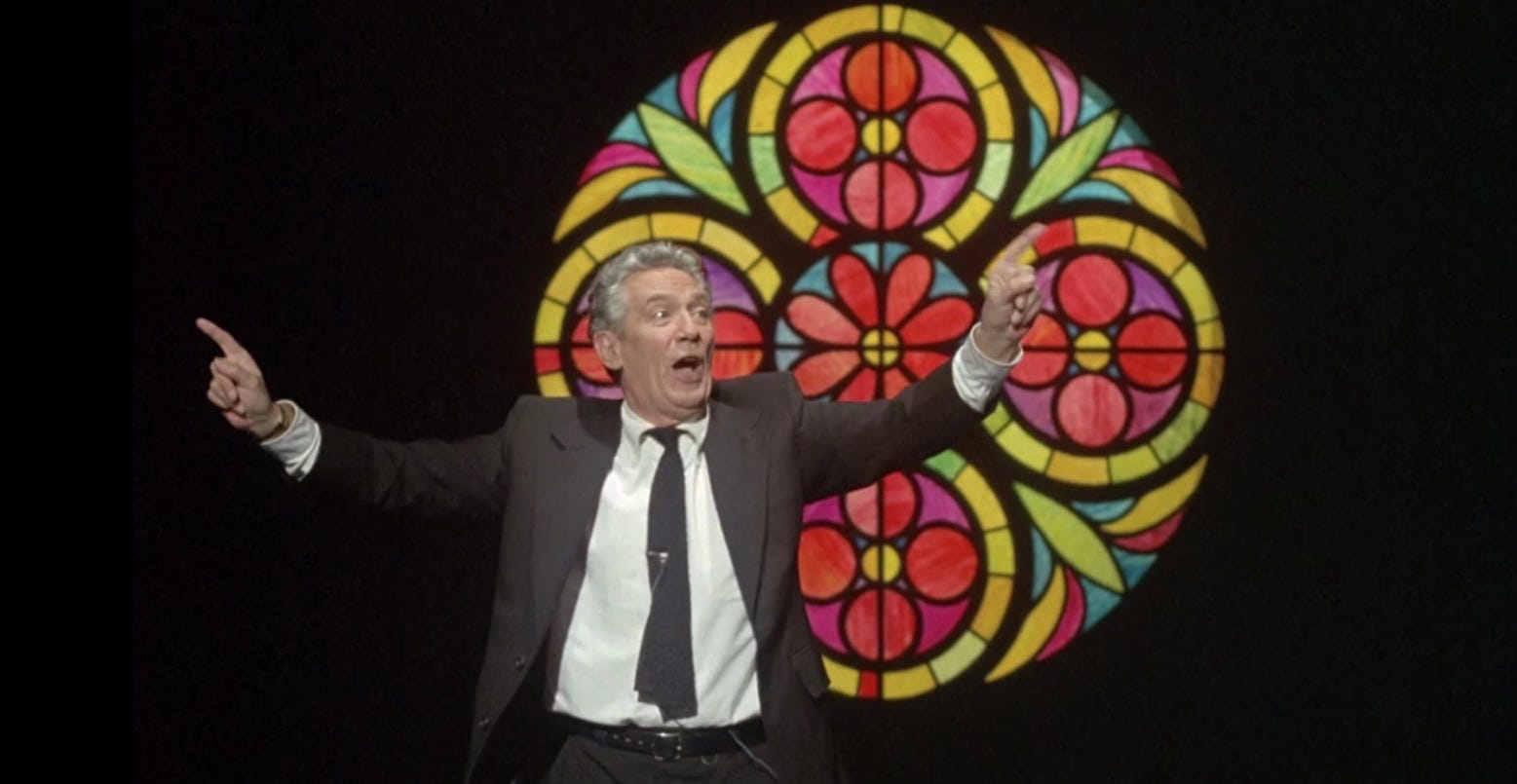
Sidney Lumet’s Network (1976) is a brilliant — and remarkably prescient — satire on an immoral media: a deeply cynical corporate world and its ruthless pursuit of ratings. Peter Finch, Faye Dunaway, William Holden and Robert Duvall star. A fantastic film: it’s a buy.
We spent yesterday evening watching Inside the Manosphere (2026), Louis Theroux’s trendy Netflix documentary. What struck me most about these influencers — ghastly as they are — is how it’s really all about the money. I’m not even sure if they actually believe in all the unsavoury, brain-dead conspiracy theory bollocks they’re spouting. They’re shock jocks. Say something outrageous, get God knows how many likes, and kerching, there’s another x thousand bucks into your crypto account. Or a radioactive Lambo, bought on hire purchase. They’re salesmen. Flogging crap to insecure adolescent boys, impressionable men down on their luck, who seem to lap it all up. This makes Sidney Lumet’s Network (1976) remarkably prescient. A film made before the horror of reality television, before Jerry Springer (1991-2018) and all that jazz: obese, dysfunctional people screaming abuse at each other, tattooed weirdos married to their goats. Nothing like sleeping with the father-in-law, is there? Or lopping off your meat and two veg: “My brain just kept saying, 'Get rid of them.’”Gladiatorial entertainment for the masses.
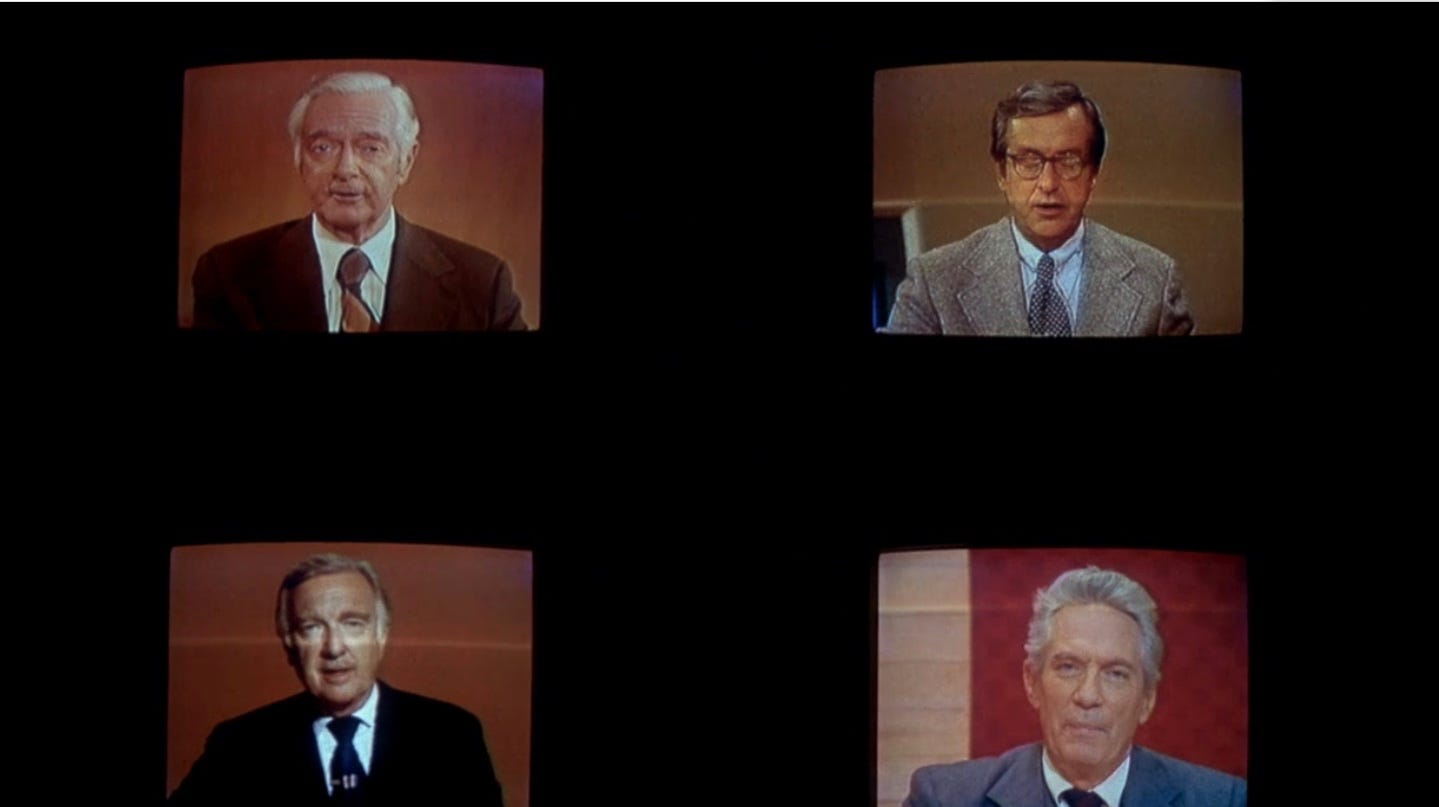
In 1974, American television news reporter, Christine Chubbuck, shot herself in the head on live television. The parallels with Network (1976) are obvious, although my understanding is that the writer, Paddy Chayefsky, insisted that he began work on the script before Chubbuck’s suicide. But as we have seen in previous posts, it’s interesting how certain themes and ideas seem to crop up simultaneously at certain times. Anyway. Howard Beale (Peter Finch), a greying news anchor for UBS (an imaginary television channel, with a flagging audience), ‘the grand old man of news’ (a sort of Walter Cronkite), suddenly goes bonkers and announces at the end of his Evening News slot that he’s going to commit suicide live on air next week. Unsurprisingly, the audience figures go up.
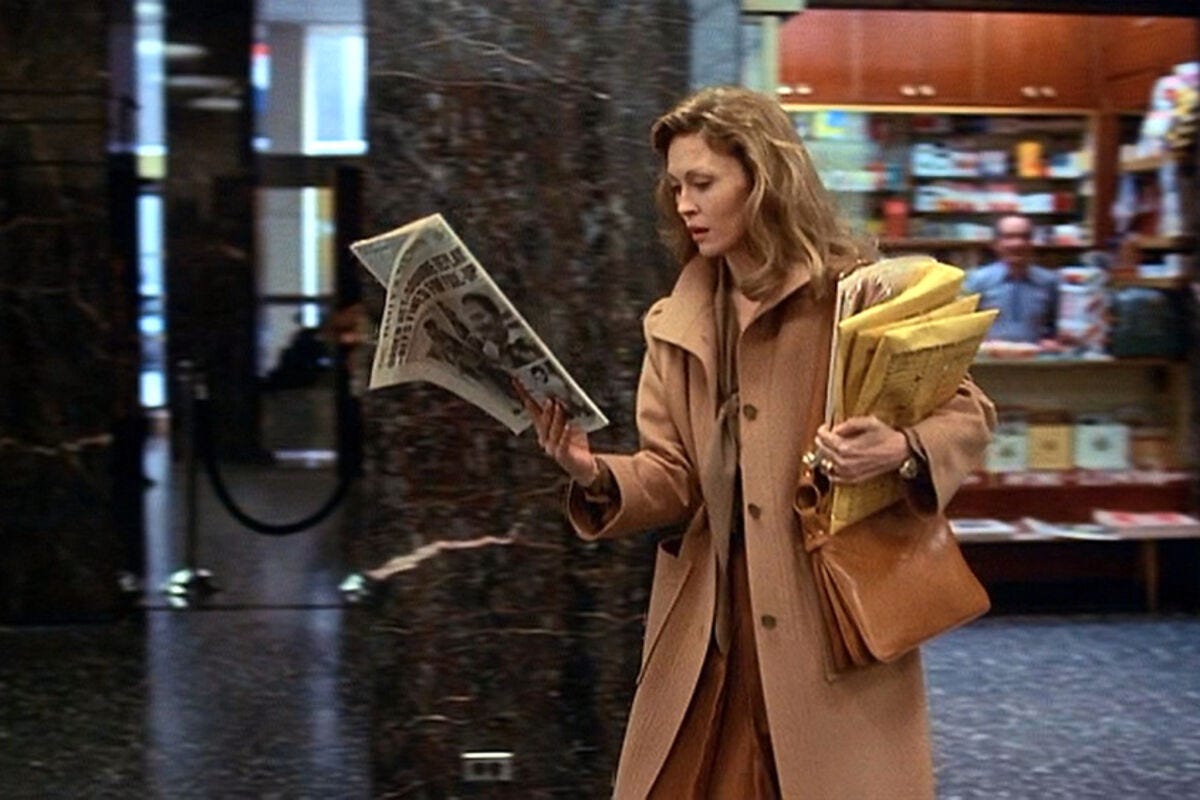
But instead of sacking him, Diana Christensen (Faye Dunaway), the ambitious and rather elegant programming chief, suggests to News Division President, Max Schumacher (William Holden), that they develop Beale’s news show into a regular dumbed-down, lowest common denominator ‘news’ slot, starring the increasingly insane Beale as the ‘mad prophet of the airwaves’. Popular catch-phrase: “I’m as mad as hell, and I’m not going to take this anymore!” A populist rant, where it’s easy to pinpoint all the wrongs in the world, without any constructive solutions.
It’s like social media, forty years too early. Beale persuades America to shout out from their windows en masse, all at the same time. Actually, thinking about it, not unlike that mass doorstep clap during Covid.
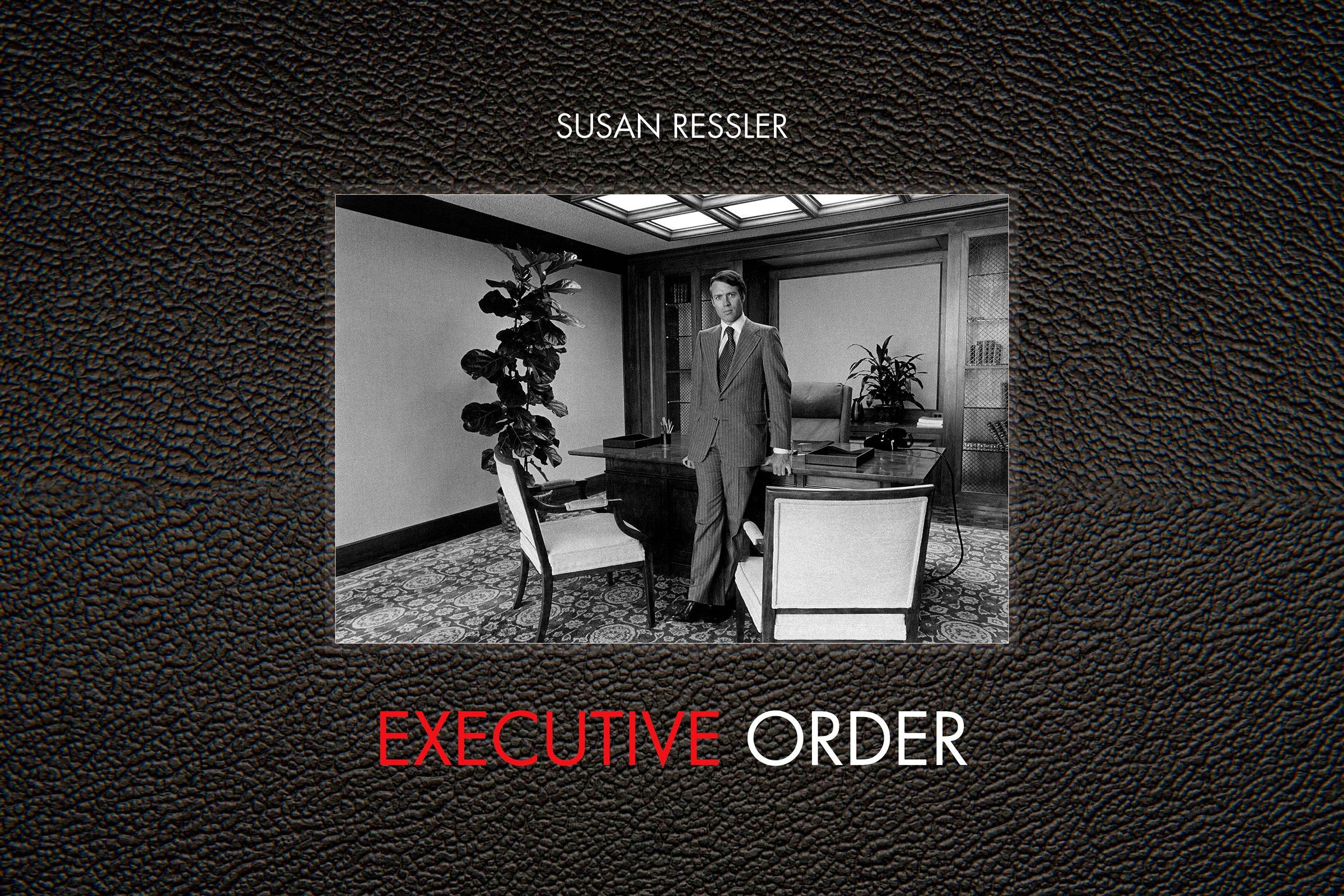
Faye’s great. Diana’s deeply attractive in her late-1970s understated executive fashion, the camel-hair coats, whippet-thin waist, the expensive ‘cognac’ leather and the rest, and it’s easy to see what Max Schumacher (William Holden) sees in her. But she’s also a woman without scruples, a woman with few interests outside her work — and her own personal ambition. And visually, Network (1976) captures this late-1970s American corporate look in spades, a look I like very much indeed, despite my previous struggles with corporate life, i.e. I’m virtually unemployable.
