
Performance (1968)
"I'll tell you this: the only performance that makes it, that really makes it, that makes it all the way, is the one that achieves madness..."

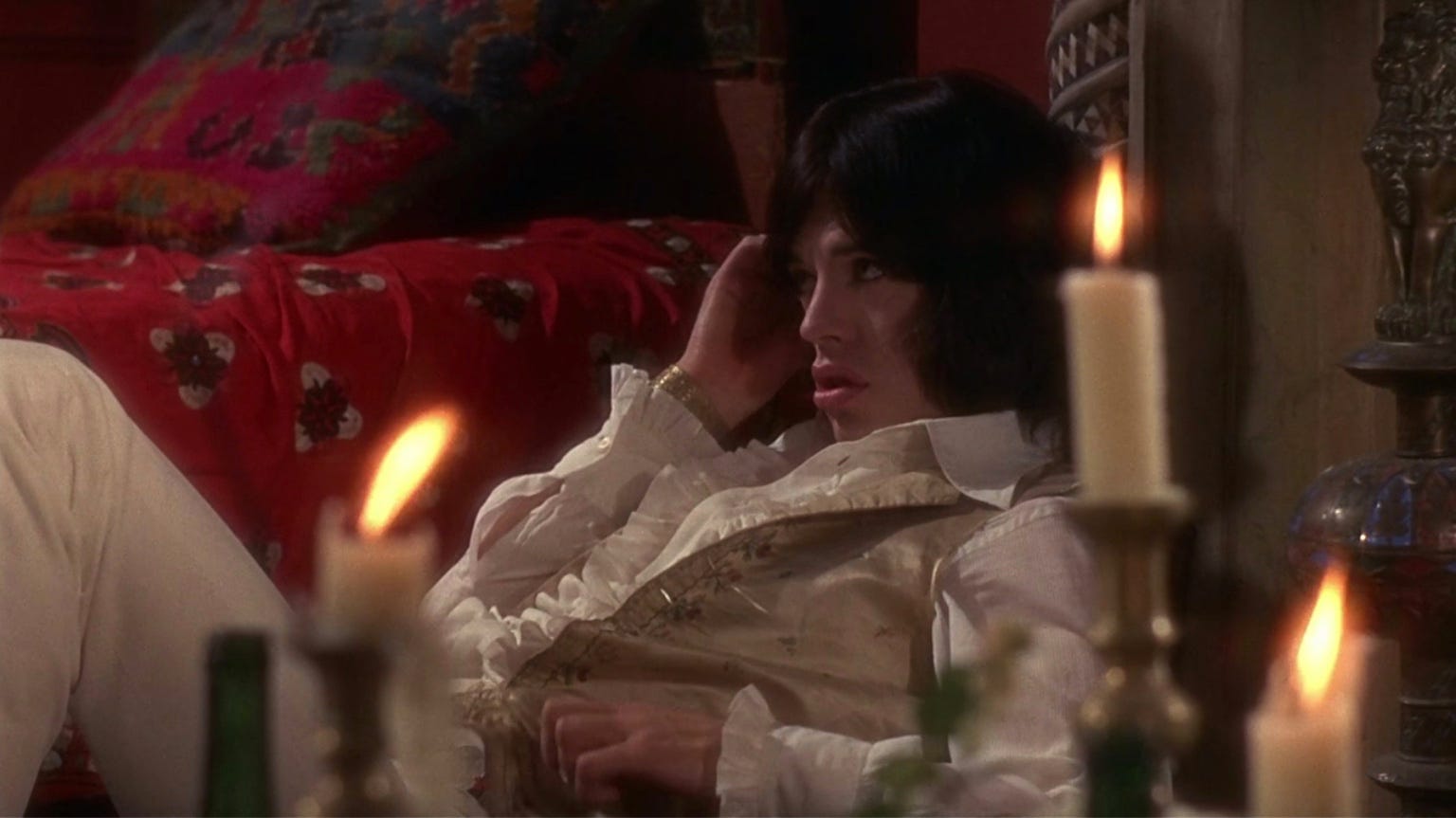
Luke Honey’s WEEKEND FLICKS. Cinema for Grown Ups is a reader-supported publication. To receive new posts and support my work, please consider becoming a free or paid subscriber.
Then and now. The London of 1968 and the London of 2025. Two very different places.
I caught the fag end of this netherworld in the late 1980s, sharing a terraced three-up, two-down in Fulham, with a pin-striped insurance broker and a rather prim girl in a Laura Ashley dress. Abandoning the Inner Temple for a ‘career’ in the so-called ‘art world’, I scraped a job with the former Bonhams in Lots Road, just off The King’s Road, found in that unfashionable no-man’s land between Chelsea and Fulham. Here, the porters humped brown furniture from lorry to salesroom, and stacked faded mezzotints and shabby Victorian canvases against the brick walls of the warehouse — for the benefit of a diverse congregation: gentleman antique dealers, Irish tinkers, South London gangsters, predatory actors and bored Mayfair housewives. Dinner at Crockford’s and “Come and See my Etchings”.
Despite the onset of gentrification, Fulham lacked the estate agent’s touch. Sodium lighting, the late-night bus, sodden newspapers and the Go Gay Launderette in the Fulham Road. As the Head Furniture Porter at Phillips once said to me: “In my day, Lad, you paid to get out of Fulham, not into it.” In this netherland of 1960s and 70s Chelsea, the toffs rubbed shoulders with the criminal classes. Here’s Society antiques dealer, Christopher Gibbs, describing the Krays, as interviewed by Nicholas Shakespeare for his book, Londoners (1986):
Coarse people, he says now, ‘in bright suits, with good-looking chauffeurs, talking rubbish late into the night.”
It is, of course, a vanished world.
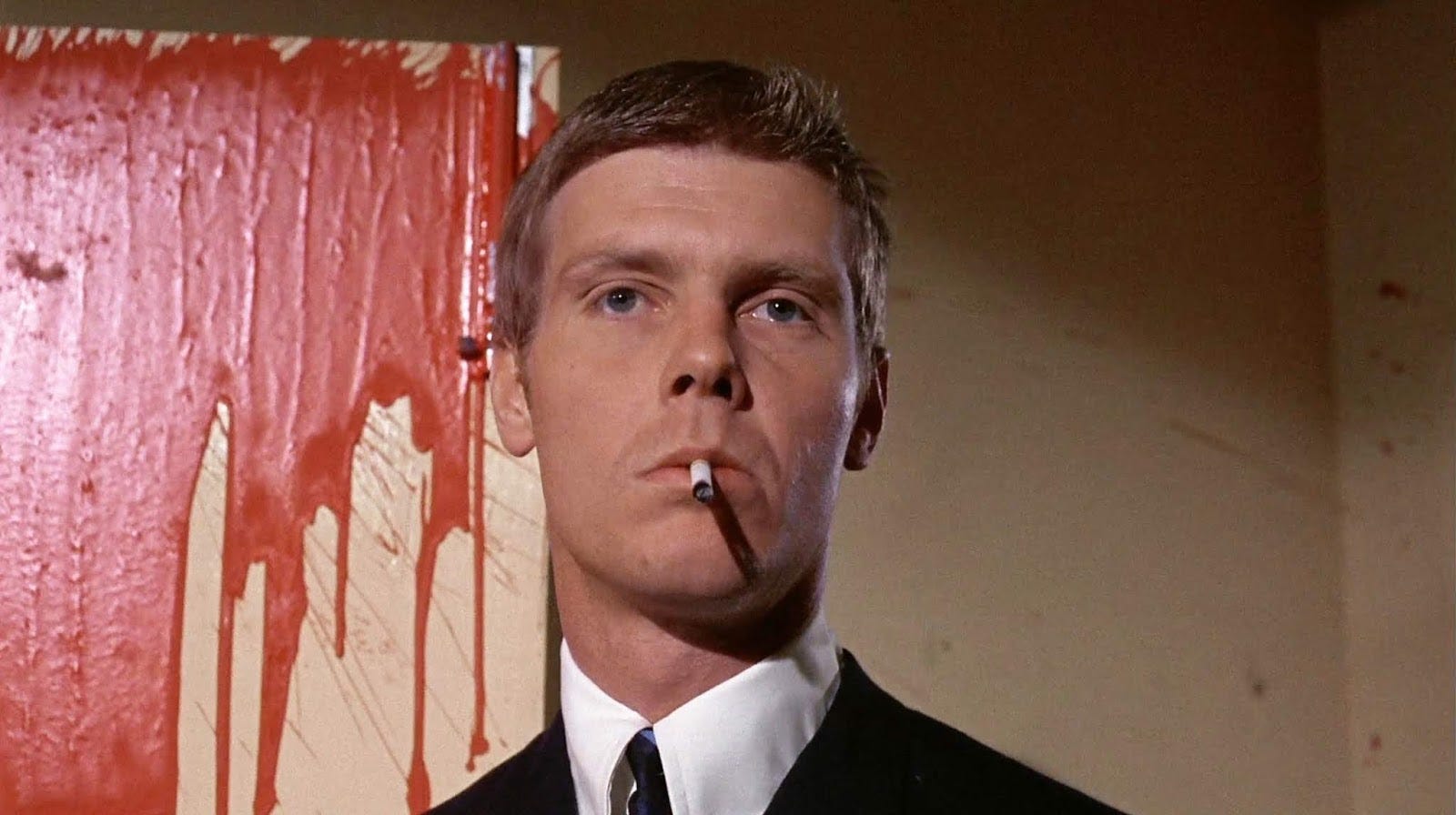
Which takes us to Performance (1968), co-directed by the former painter, Donald Cammell and, of course, the brilliant Nicolas Roeg. Performance, surely, has to be the ultimate Rock n’ Roll film. By the late 1960s, the ‘Swinging London’ of A Hard Day’s Night (1964) had developed into something else. Something more anarchic — and certainly more libertine. Smashing Time (1967) now strikes me as decidedly dated.
James Fox stars as Chas Devlin, an unsavoury London gangster with an Irish mother. ‘A real performer.’ And it is a brilliant performance. Compare Fox’s Chas to his upper-class, ineffectual Tony in The Servant (1963). Despite the camel-haired coats, the two characters are like chalk and cheese. Fox, an Old Harrovian, spent several months under the supervision of David Litvinoff (an habitué of the London underworld and friend of Ronnie Kray), intermingling with undesirables in the boxing circuits of South London, shedding his accent and absorbing the mannerisms of a spiv. Fox became obsessed with the role: acquiring the hard, wiry body of a boxer, the twitch of a camel-coated shoulder, the cocky, upright swagger as a dustbin goes through a bookmaker’s window on the Fulham Road: the anal, control-freak bachelor flat in Dolphin Square: serried rows of flash gold cufflinks arranged in a drawer, sharp suits from Cecil Gee; the white getaway Jag. It’s perfect.
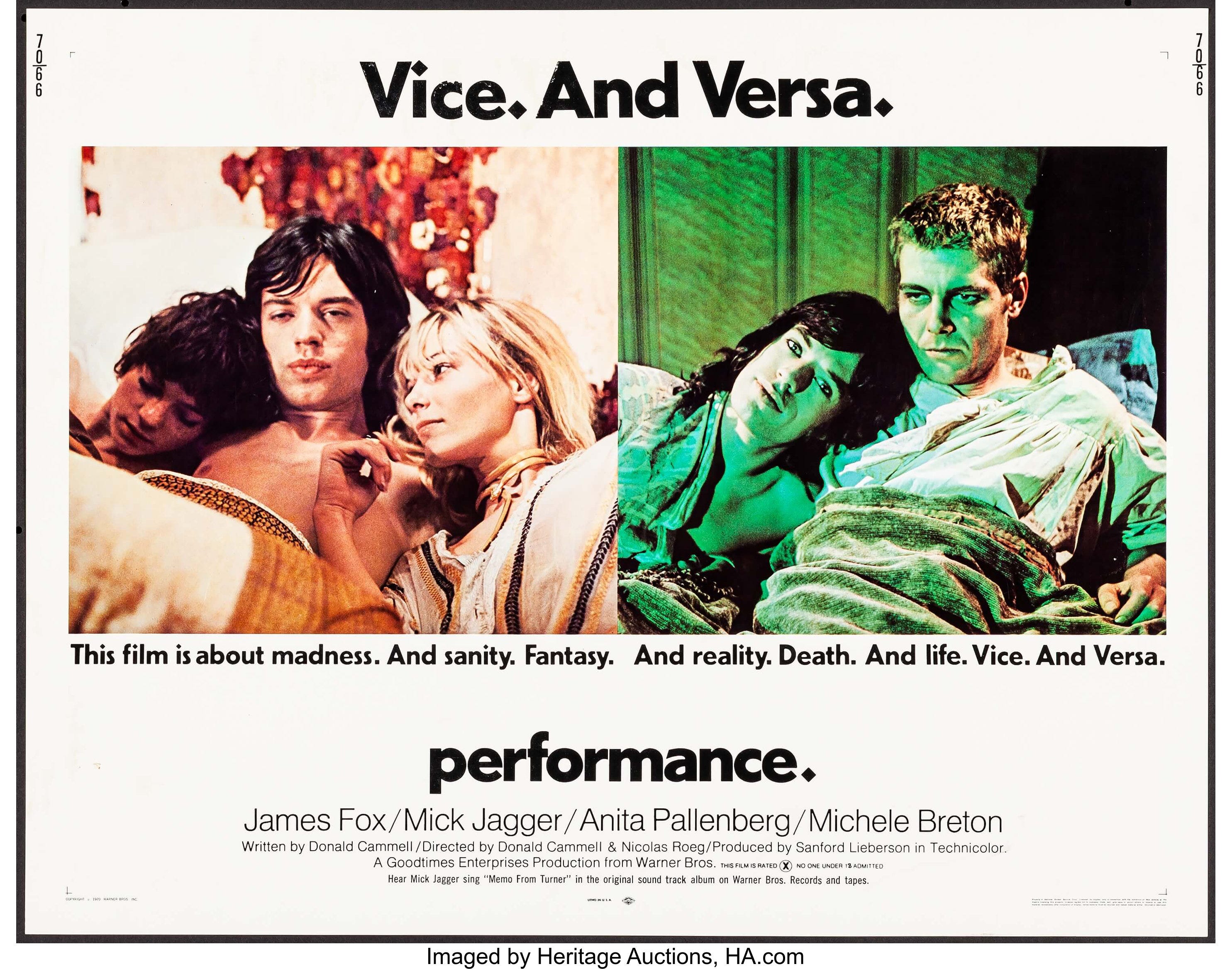
And Johnny Shannon plays Chas’s gangster boss; in another remarkable performance, considering Shannon had never acted before. And then there’s the infamous John Bindon, rumoured to have dated Princess Margaret at The Gasworks Restaurant in Fulham, and subsequently tried and acquitted for the murder of gangster John Darke outside the Ranelagh Yacht Club — a part-time actor with underworld connexions. It’s stuff like this that gives Performance its authenticity: a buzzword I tend to avoid, but in this case, more than appropriate.
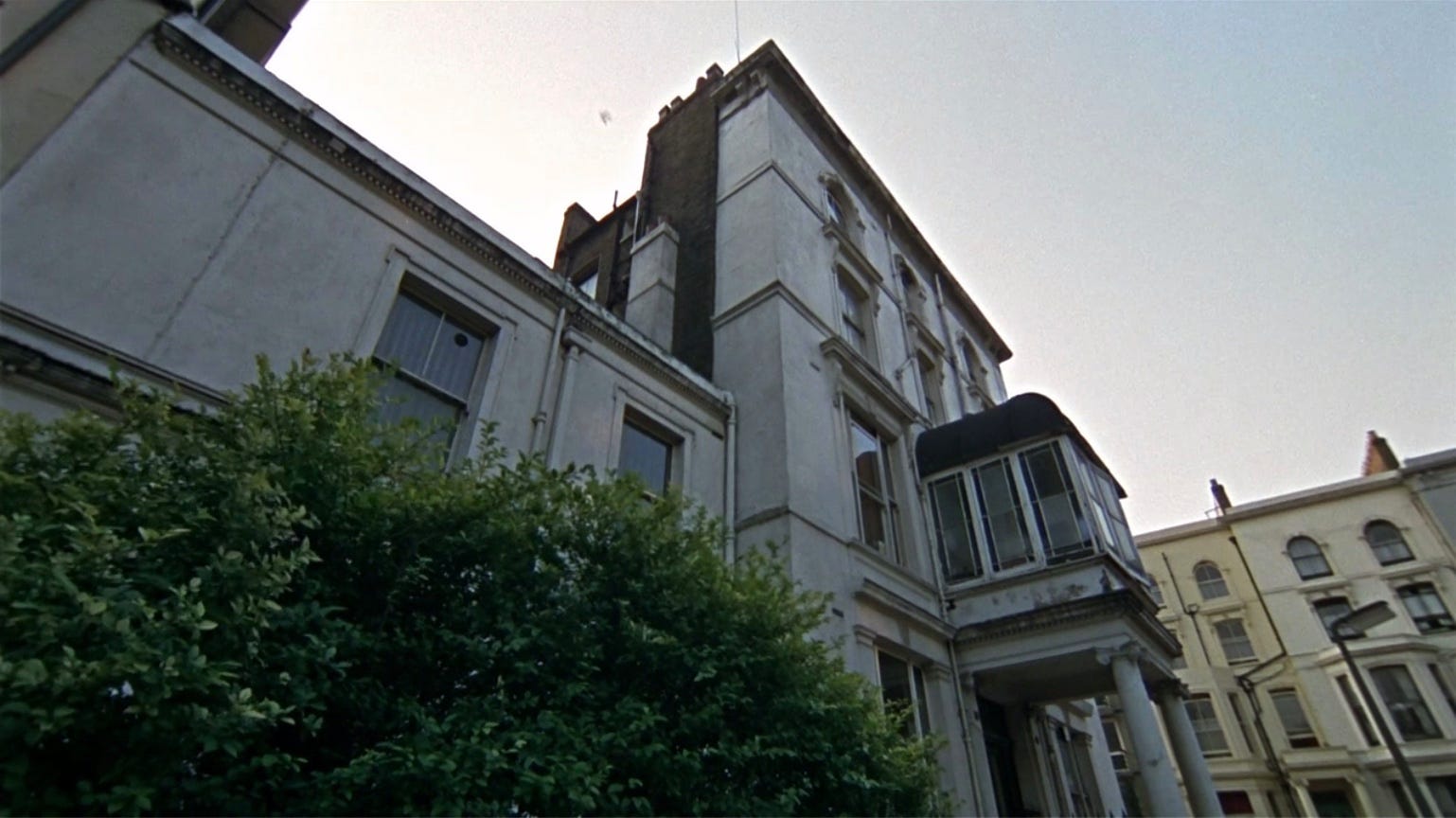
And that’s more or less the first half of the film, a brutal, realistic exposé of London gangland culture in the late 1960s. Where violence and intimidation are a daily occurrence: smashing up a shop or a flat, shaving a chauffeur’s head, or pouring acid on a barrister’s Rolls-Royce. All part of a hard day’s work. And then things get interesting. Following a violent and ultimately deadly fracas with former colleague, bookmaker, Joey Maddox (Anthony Valentine), Chas goes to ground in a basement flat in Powis Square, just off Notting Hill Gate, the haunt of slum landlord, Peter Rachman.
Even today, Notting Hill Gate is still a transient place: a clogged artery connecting Tyburn Fields to the East, and Shepherd’s Bush to the West; a brick’s throw from the immaculate houses of bourgeoise Kensington to the South, and the shabbier, grander houses of Bayswater on its outer fringe, which, in the rare event of snow and with their first-floor conservatories, remind me of St Petersburg. In the mid-1980s, the bankers began to move into Notting Hill — an area notorious for burglary, riot and murder — and the streets, haunted by the ghosts of ‘Lt. Colonel’ Neville Heath at the Pembridge Court Hotel, and the ghastly Christie at the now demolished Rillington Place, began to take on a new vibe. The spacious, grand old villas of the former ’North Kensington’, ripe for restoration and redevelopment: a land of peeling stucco and faded glories.
