
The Train (1964)
"A painting means as much to you as a string of pearls to an ape..."

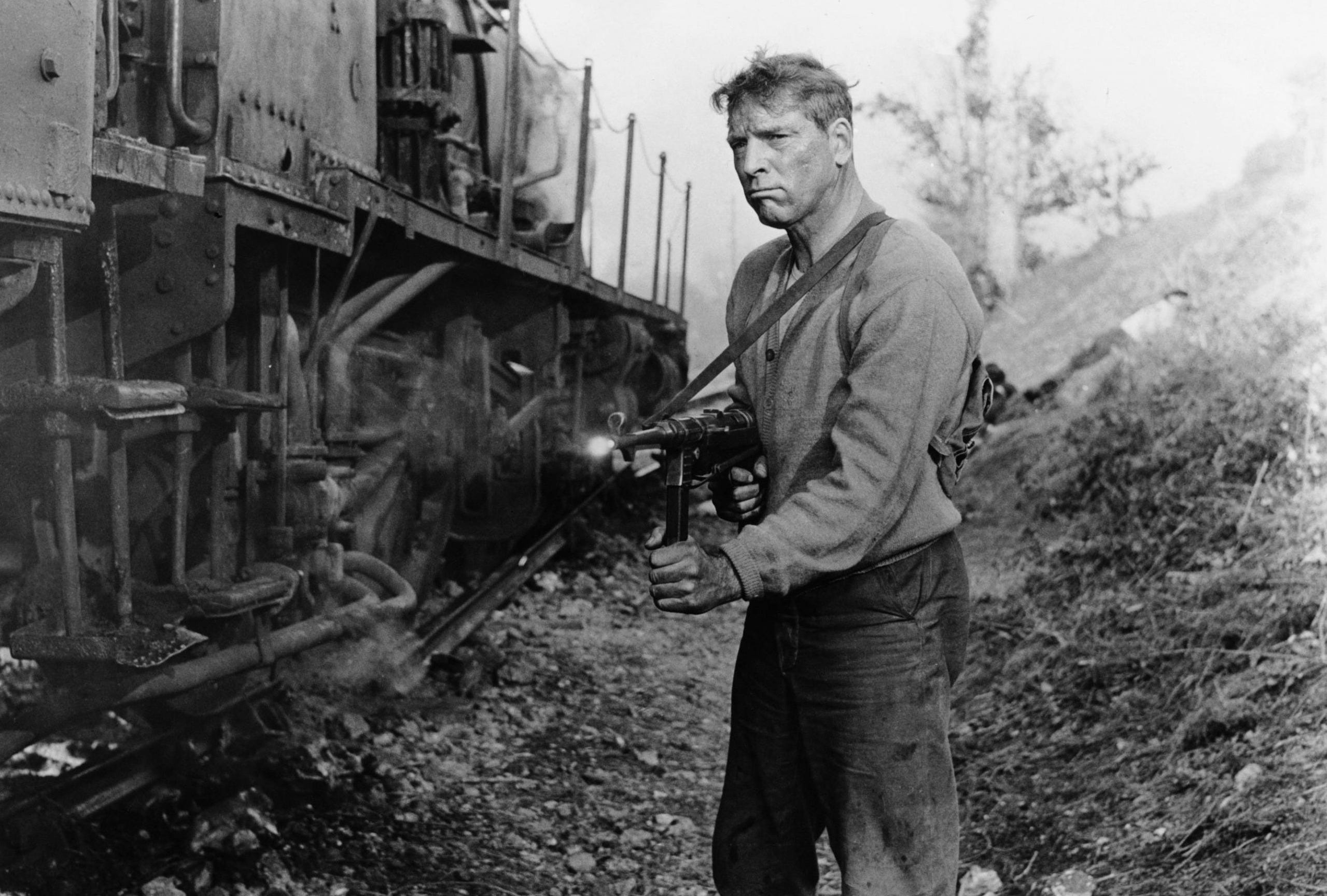
Sunday’s film (which, as always on a Sunday, is free and can be read by all) is John Frankenheimer’s The Train (1964), starring Burt Lancaster, Paul Scofield and Jeanne Moreau, ‘one of the last big action pictures to be shot in black and white.’ I hope you enjoy it…
Currently, The Train (1964) is free to watch on YouTube Movies, if you can put up with the tiresome advertising. I have to admit that it was a new one on me. But that’s the beauty of WEEKEND FLICKS. Cinema for Grown Ups. Seemingly, there’s a never-ending supply of interesting films to add to our list. And I have my own little rule. Every film we discuss has to have something about it. That undefinable je ne sais quoi. It doesn’t necessarily have to be ‘good’ — whatever that means. Which, of course, is entirely subjective. But as I said, right at the very beginning — a very good place to start — WEEKEND FLICKS. is a personal view, with all that comes with it.
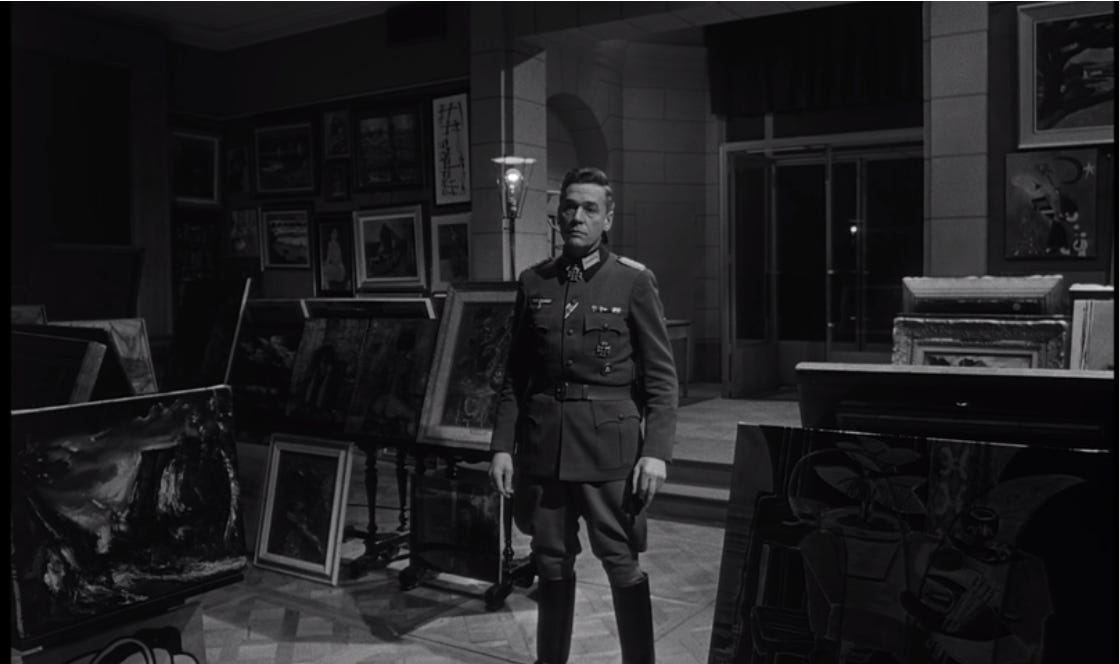
The Train (1964) is based on a true story (Up to a Point, Lord Copper), as documented by Rose Valland in her book, Le front d’art (1961). Valland was the curator of the Musée Jeu de Paume and a member of the French Resistance. During the occupation of France, the Germans used the Jeu de Paume as a storage depot — a systematic processing hub — for significant works of art looted from museums and private (i.e. Jewish) collections across France, before shipment to Germany. I remember the Jeu de Paume well. It was an especially delightful, but small, museum of Impressionist Art in the Northwestern corner of the Tuileries gardens, next to the Place de la Concorde: built for Napoleon III as a ‘real tennis’ court in 1861. And, of course, it’s still there, but the impressionist paintings have been sent, I think, to the Musée d’Orsay, and the Jeu de Paume is now a centre for modern and postmodern photography.
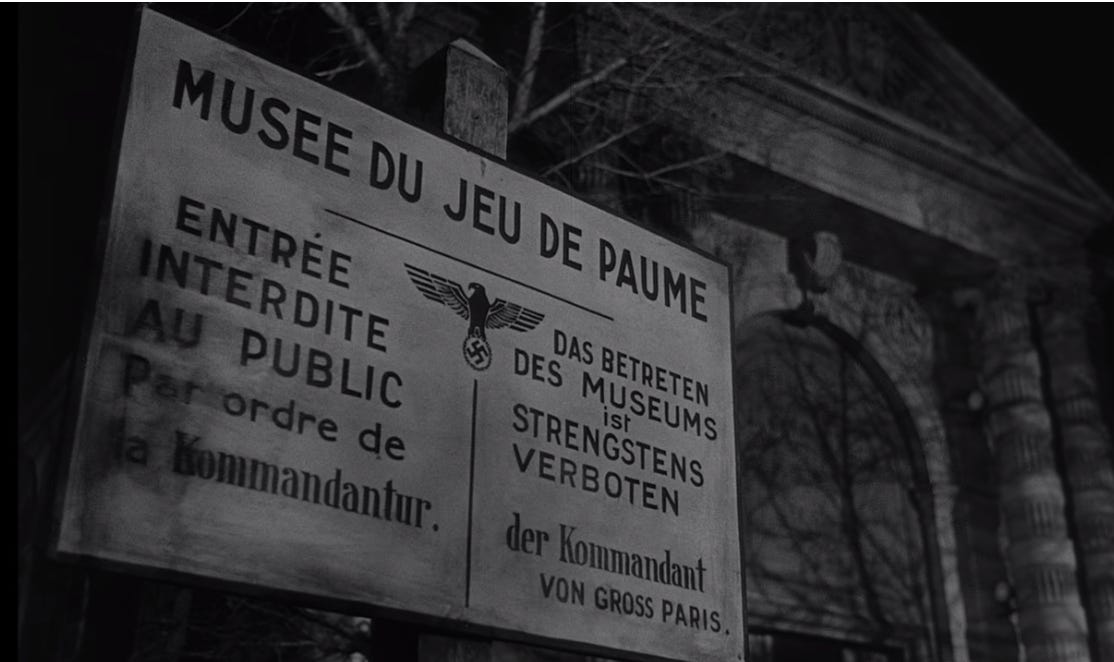
Rose Valland was a remarkable woman. She managed to catalogue, in secret, the entire contents of the Jeu de Paume at a considerable personal risk. For on the night of the 27th July 1942, in the grounds of the Jeu de Paume, the Nazis burnt several thousand (I would need to double check the figures) ‘degenerate’ works of art, including pieces by Picasso, Miró, Klee and Dalí. An act of appalling, almost unparalleled, cultural vandalism.
And then in the August of 1944, with the Allies knocking on Paris’s door, the Germans decided to send a further selection of paintings (148 crates, I think) to Berlin by train, delayed only by the Resistance in a barrage of creative red tape and bureaucratic paperwork. The train, thank God, managed to get no further than the suburbs of Paris, where it was seized by Lieutenant Alexander Rosenberg of the Free French Forces, who just happened to be the son of the distinguished art dealer, Paul Rosenberg.
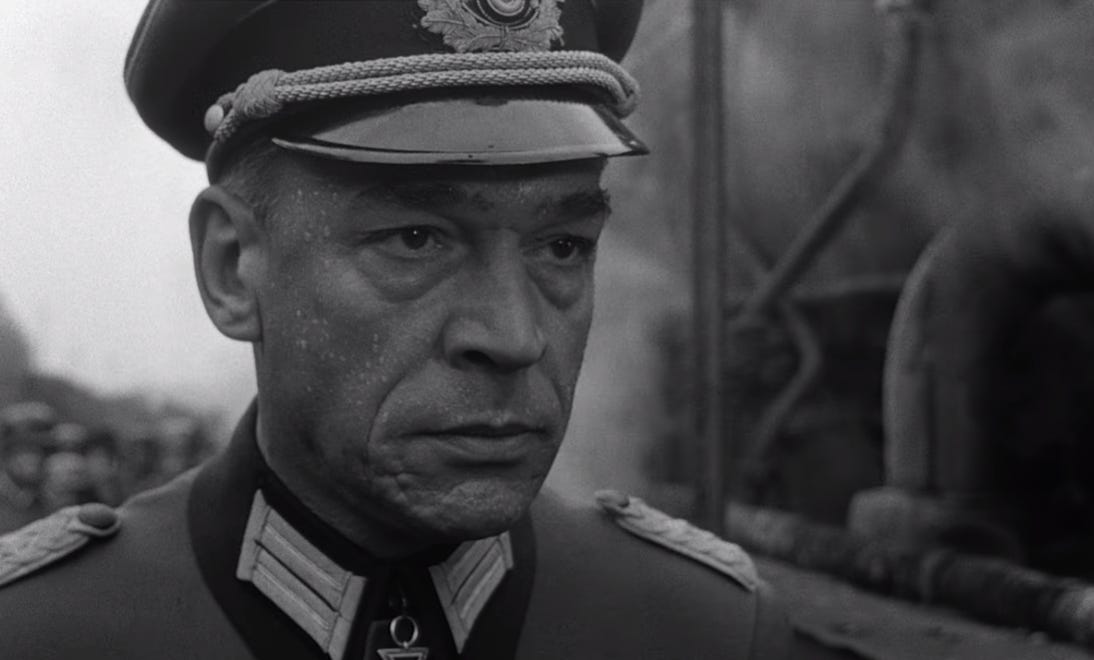
All this, of course, is fertile ground for the writer of thrillers, or for that matter, the digital television channels. We’re in Nazi gold territory. And so The Train (1964), understandably, is a little bit economical with the actualité. But then, why not? It’s a film, ain’t it? Paul Scofield plays the dastardly Colonel Franz von Waldheim, a man who, despite the jackboots, seems to be some sort of cultured aesthete, a lover of modern and post-modernist painting, despite their ‘degenerate’ status, or at least as perceived by the Nazis. And Waldheim is tasked with the job of transporting the paintings to Berlin by train. Which is where SNCF railwayman, Paul Labiche (Burt Lancaster) comes in. Labiche also happens to be a member of the Resistance. And so the film becomes a desperate battle of wills between von Waldheim and Labiche as the Resistance uses every means at its disposal to thwart the train’s journey to the German border.
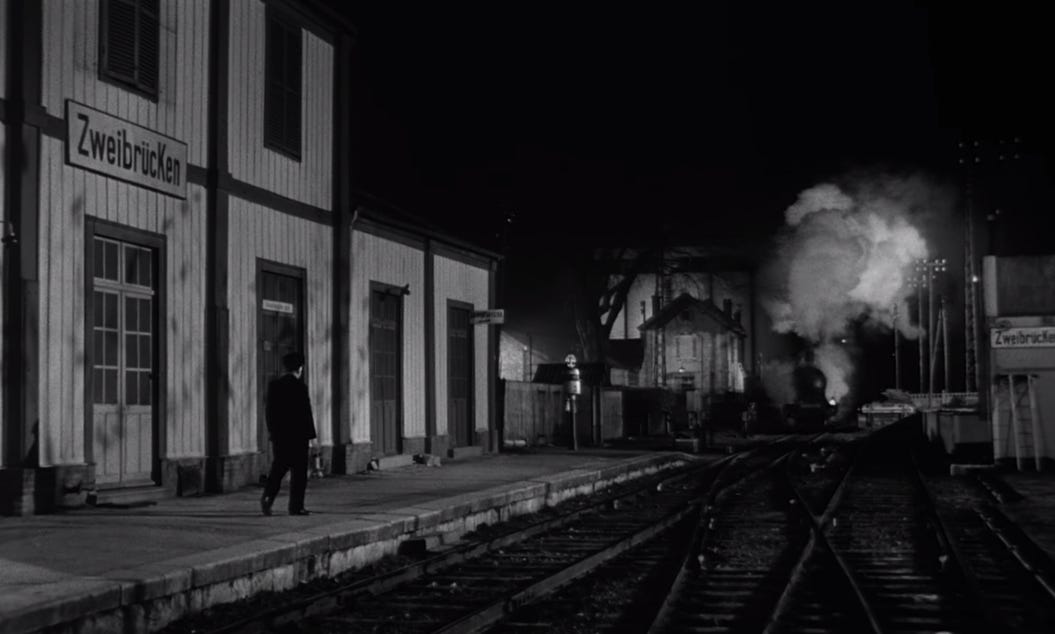
It’s an unusual and sophisticated thriller, with a cracking cast (Jeanne Moreau’s the owner of a small hotel) and especially visual. Black and white film stock works brilliantly for old railway films, with the chiaroscuro effect of billowing, luminous steam, especially at night — as seen in the cinematography of Brief Encounter (1945) and, to a lesser extent, Night Mail (1936). Frankenheimer himself remarked during the DVD commentary:
Incidentally, I think this was the last big action picture ever made in black and white, and I am personally so grateful that it was filmed in black and white. I think the black and white adds tremendously to the movie.
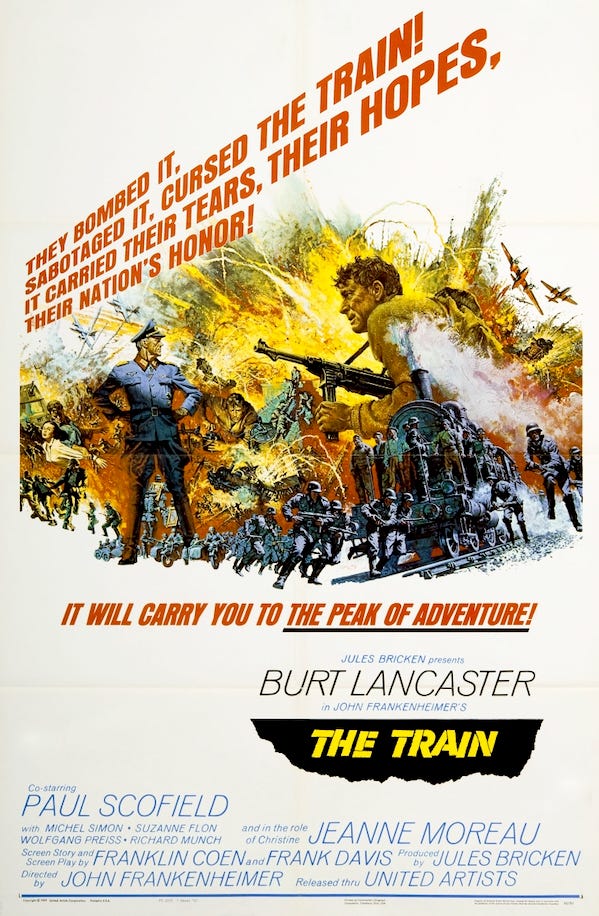
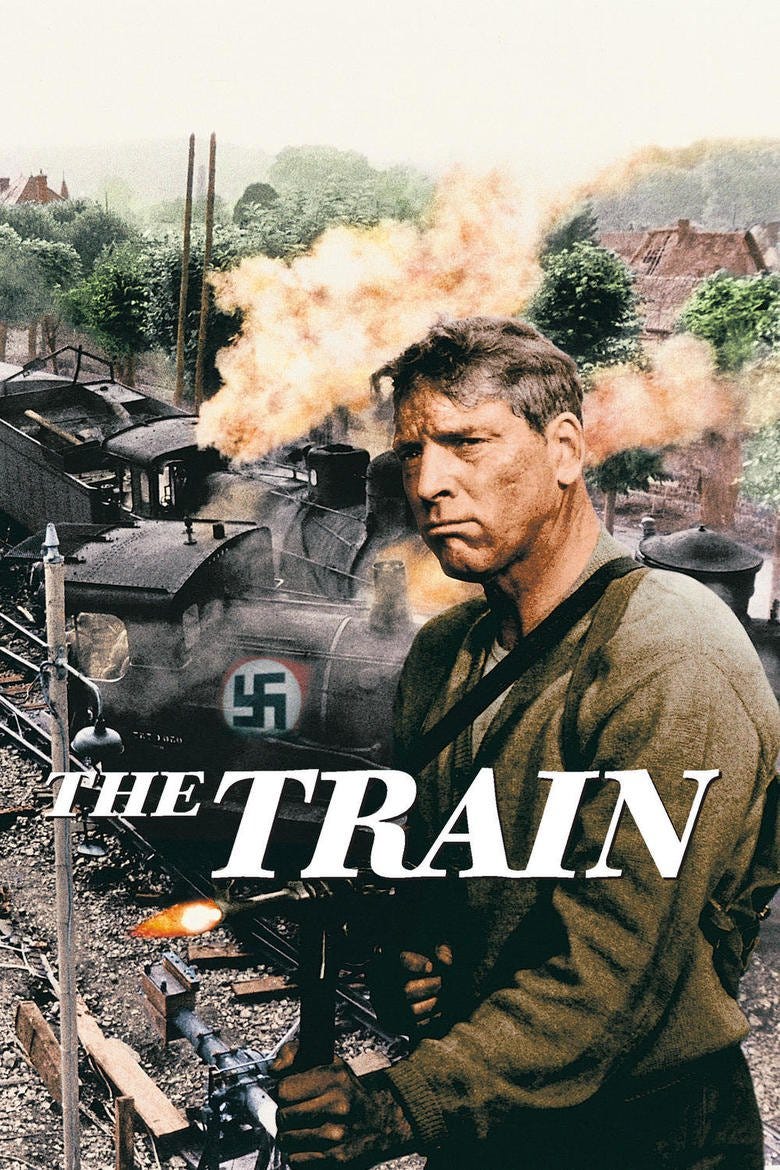
But it’s amusing how the studios (in this case, United Artists) marketed their otherwise innocent films. With lurid posters, making their films out to be far more shocking, salacious, sexually deviant, exciting, adventurous, or violent than they actually were. So that something quite harmless, or tame by today’s standards, might appear to have something more in common with the morals of Sodom and Gomorrah; when, actually, The Train (1964) is a beautifully-made, slowish, rather thoughtful film with a distinguished cast. Or nothing like Kelly’s Heroes (1970), the ultimate Nazi gold flick.
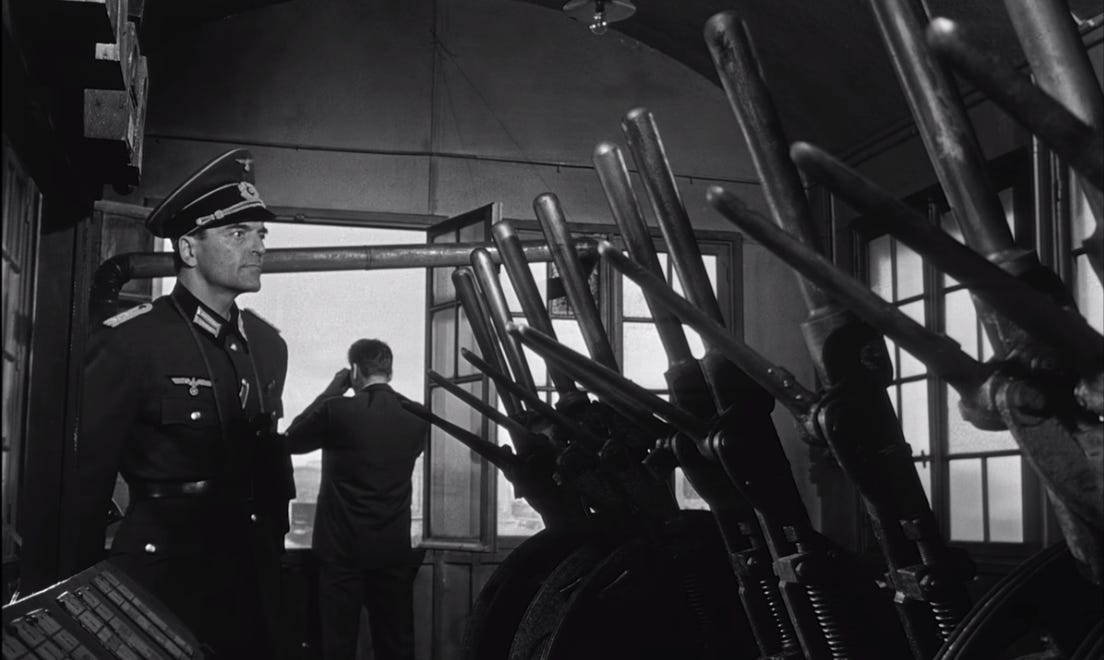
I like The Train’s considerable production values. It’s an entirely mechanical film, with appropriate sound and industrial visuals: the clunk of metal on metal, the hiss of escaping steam; the blown gaskets, nuts and bolts, oil and grease. How they managed the numerous real-life effects is anybody’s guess, with genuine steam engines running off the rails, crashing, or getting blown up (let alone the Spitfire strafing scene, as the train races towards the safety of a tunnel). I can only assume that with the transition to diesel and electric traction, the SNCF had an inexhaustible supply of newly decommissioned steam locomotives to play with. Speaking the obvious, there is, of course, no CGI.
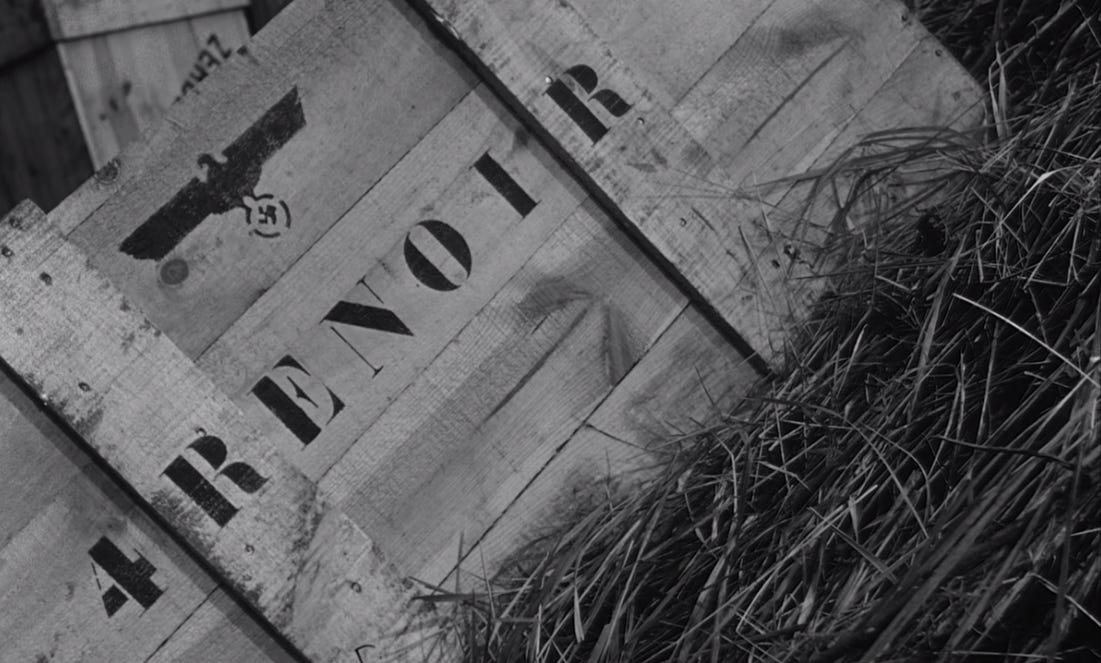
And, ironically, it’s Colonel von Waldheim who appreciates his shipment, with his rather Fascist take on aestheticism (and I’m using that misused term in its proper, historical sense): “Beauty belongs to the man who can appreciate it”, while the railwaymen — the Resistance — are ordinary working men, for whom “a painting means as much to you as a string of pearls to an ape”, who given half a chance would blow up the Picassos, the Braques and the Renoirs for the Glory of France. So that by the end of the film (and this is not ruining the plot, especially) we’re left with images of the paintings (or more accurately the crates) juxtaposed against shots of the dead. Is a great work of art worth the loss of a human life? I have my own views on this. But that’s something you will have to decide for yourself.
I watched The Train (1964) for free on YouTube Movies, although the increasingly irrelevant advertising — in my case, an exceedingly dodgy AI salesman clone (looking and sounding suspiciously like a bearded Nigel Farage), flogging an exceedingly dodgy financial ‘product’ — began to grate. Otherwise, and this is the saner option, The Train (1964) is available on DVD and Blu-ray.
Right. Where are we? That was Film No. 200 and Something in the official WEEKEND FLICKS. Cinema for Grown Ups Archive. And by now you should know how it works. Friday’s post is for the Paid Subscribers (£5 a month or £50 a year). An elite coterie of discriminating cinephiles. Paid subscribers also get access to the entire archive, which goes all the way back to when we started, in December 2023.
Sunday’s post is free and open to all. So two film recommendations to get your teeth into over the weekend. Time to sit back, relax, mix a cocktail — and watch an old film.
And on Wednesday mornings, we revisit a post from the archive. That’s really for the benefit of new subscribers, who may not have seen my older posts.
Enjoy The Train (1964). It’s the perfect Sunday afternoon flick. Until Wednesday. À bientôt…
It is a terrific film, and, yes, I think its black and white cinematography was a major factor in raising it above the ordinary.
Absolutely right about the stunts, too, especially the night bombing of the railway yards, which is spectacular.
Burt Lancaster was incapable of making a bad film, though he’s ably assisted here by a brilliant Paul Scofield performance as the ‘cultured’ Nazi.
And trains, like submarines, and, but to a lesser extent, aeroplanes, are great settings for films. The medium just loves trains. Add in a war or two, and, Voila!, you have a great adventure.
So, when are you doing Von Ryan’s Express, Luke?
The Train is one of my top ten greatest films of all time - it's peerless, if you get the chance. Battaile Du Rail (1946) is a superb dramatised documentary that explores the real-life French railway workers and how they were able to frustrate and thwart the nazis, and is a superb companion piece.
https://www.imdb.com/title/tt0038334/