
Zeppelin (1971)
"Where are the parachutes?"

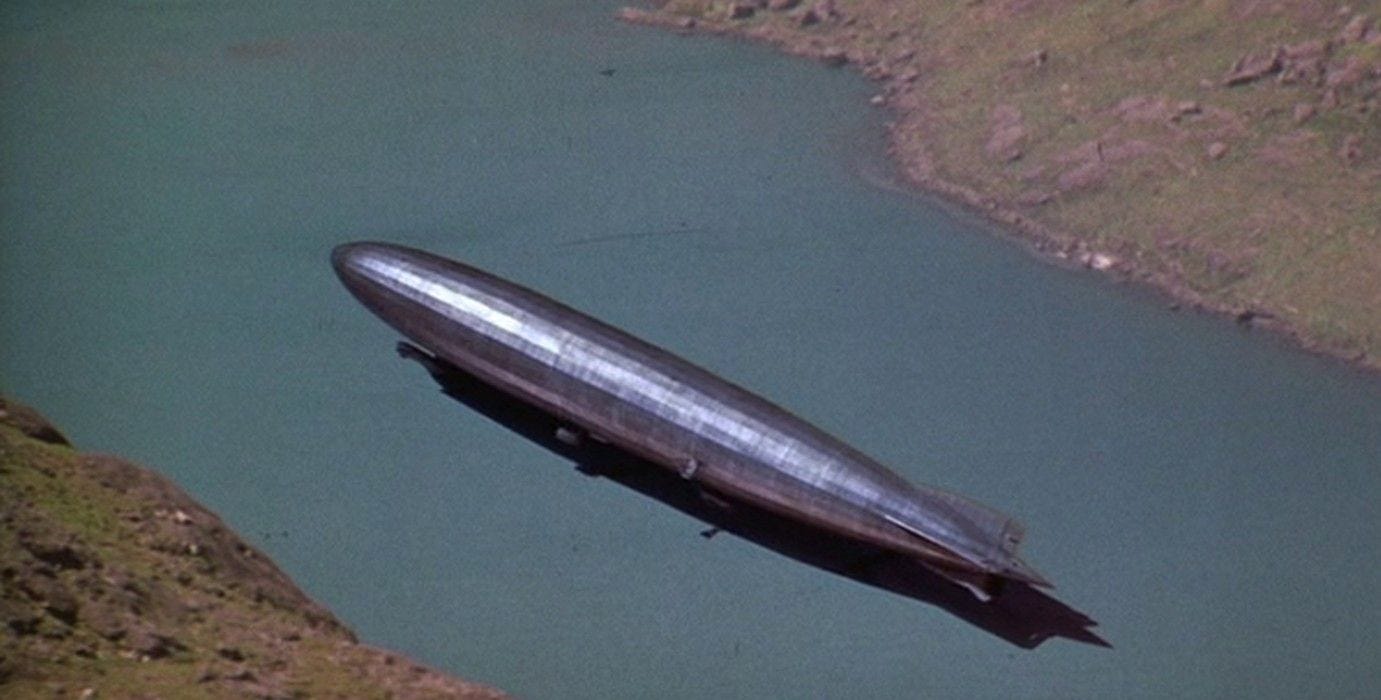
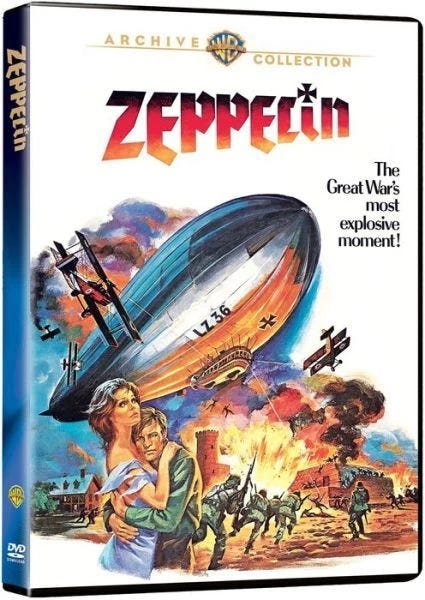
Sunday’s film, which, as always, is free and can be read by everybody and anybody, is Zeppelin (1971), starring Michael York and Alexandra Stewart. A rainy Sunday afternoon or Bank Holiday Monday special. I hope you enjoy it.
I’m a huge fan of Michael York, as I suspect you are too. He’s appeared twice in these pages so far, in Joseph Losey’s masterpiece, Accident (1967) and in Conduct Unbecoming (1975) — a rather goodish courtmartial drama, set in late 19th-century British India. Looking ahead, we need more Michael York in our lives, but in the meantime, here’s Étienne Périer’s Zeppelin (1971), a Boy’s Own Panavision spectacular, part spy-thriller, part war-film, set during the First World War. York’s a class act. He’s great in the pukka Boy’s Own parts, especially in the First World War stuff — think The Riddle of the Sands (1979), based on Erskine Childers’ invasion yarn of 1903 — a film, most certainly we can return to at a later date, especially as it stars the fragrant Jenny Agutter.
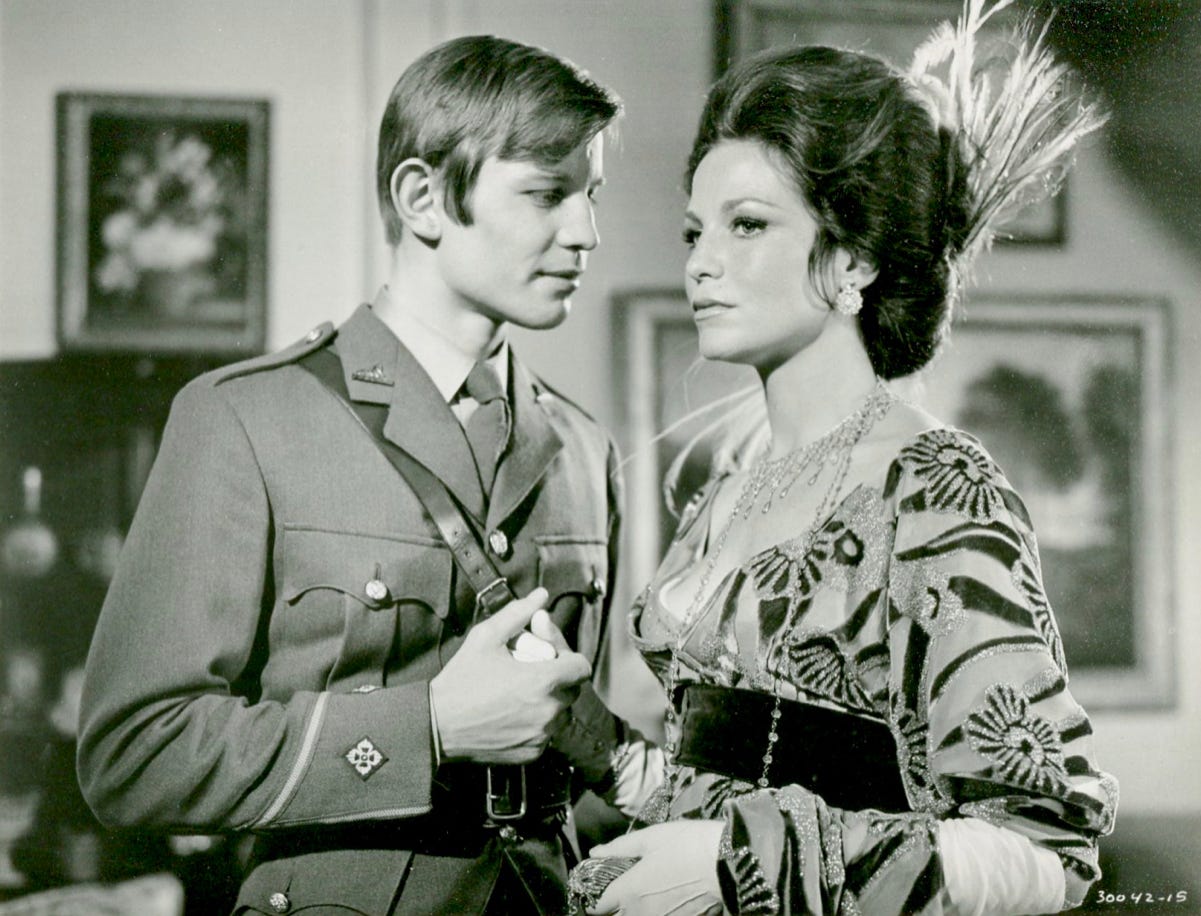
Let’s start. Geoffrey von Richter-Douglas (Michael York) is a British Army lieutenant of Scottish-German descent, with some sort of mahogany desk job in Whitehall. He’s in a Scottish regiment, and that means a kilt. And ‘cos he’s bi-lingual, and his cousins are Bavarian aristos, British Naval Intelligence sends him to Deutschland, on a secret mission to steal the enemy’s plans for the new LZ36 Zeppelin airship, under development in Friedrichshafen. In the meantime, Richter-Douglas’s bonking an older woman, Stephanie, played by the fabulous Alexandra Stewart, who’s some sort of Mata Hari, or at least, she has a chauffeur-driven Rolls-Royce. Shades of Bond, eh?
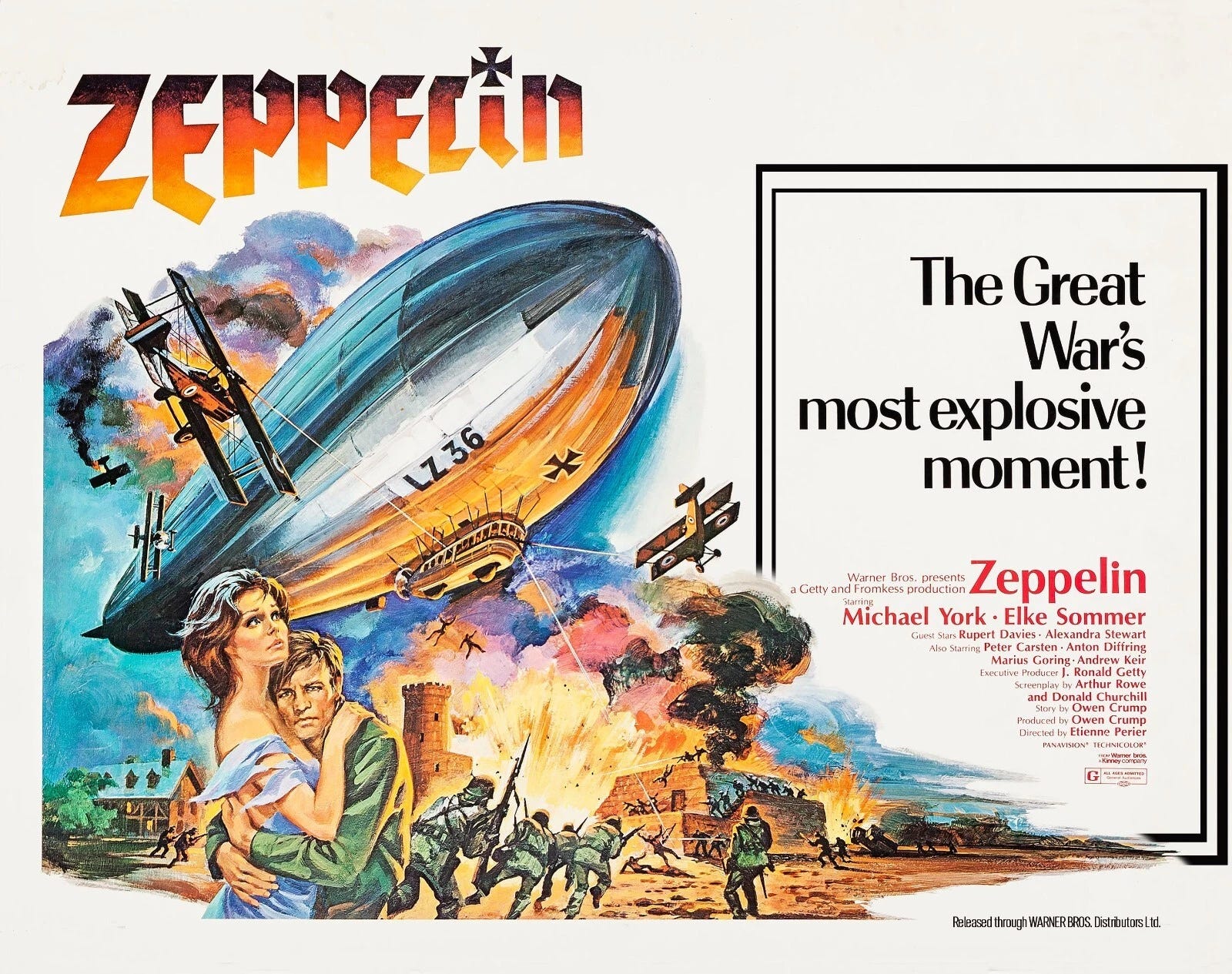
But the Germans have a dastardly plan to steal Magna Carta, for the National Archives are squirrelled away — for the duration of the War — in a remote, ruined Scottish castle in the Highlands. I love the premise of this. The idea that if the Germans steal Magna Carta, that great symbol of English liberty and freedom, then British morale will collapse and the Germans will win the war. These days, I doubt anyone’s even heard of Magna Carta, let alone understands its significance. The Daily Telegraph is obsessed with this sort of thing, sending the good burghers of Gerrards Cross into apshyxia. Stopping delinquents on the street and asking them to identify a photograph of Winston Churchill. “Er. Dunno. Isn’t that wotsisface, ‘itler?”
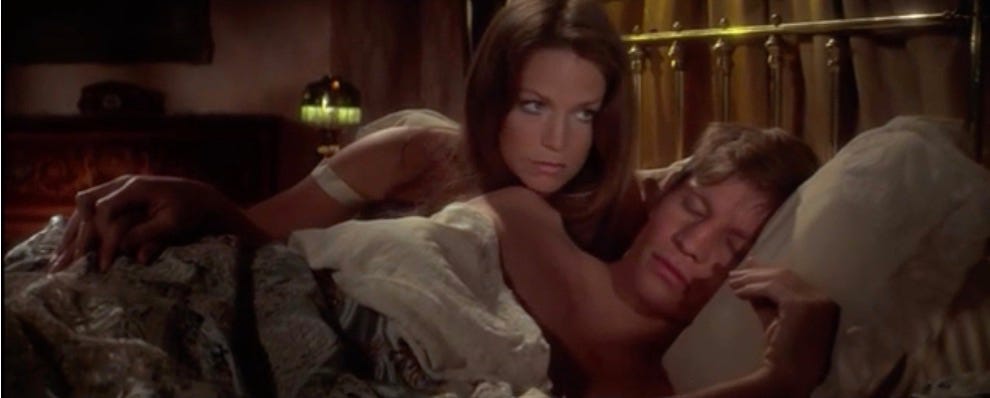
Anyway. So there’s lots of clicking of heels, and pickelhaube, and suave, and slightly sinister German officers with impeccable manners and excellent guttural English. There’s no need for subtitles, which is useful, and I expect they drink cognac. And Anton von Diffring’s in it. He always is. And Elke Sommer’s Love Interest Numero 2, as an ‘Ow d’You Say?’ Euro-Dollybird, married to Herr Doktor Professor von Somebody or Other, played by Marius Goring.
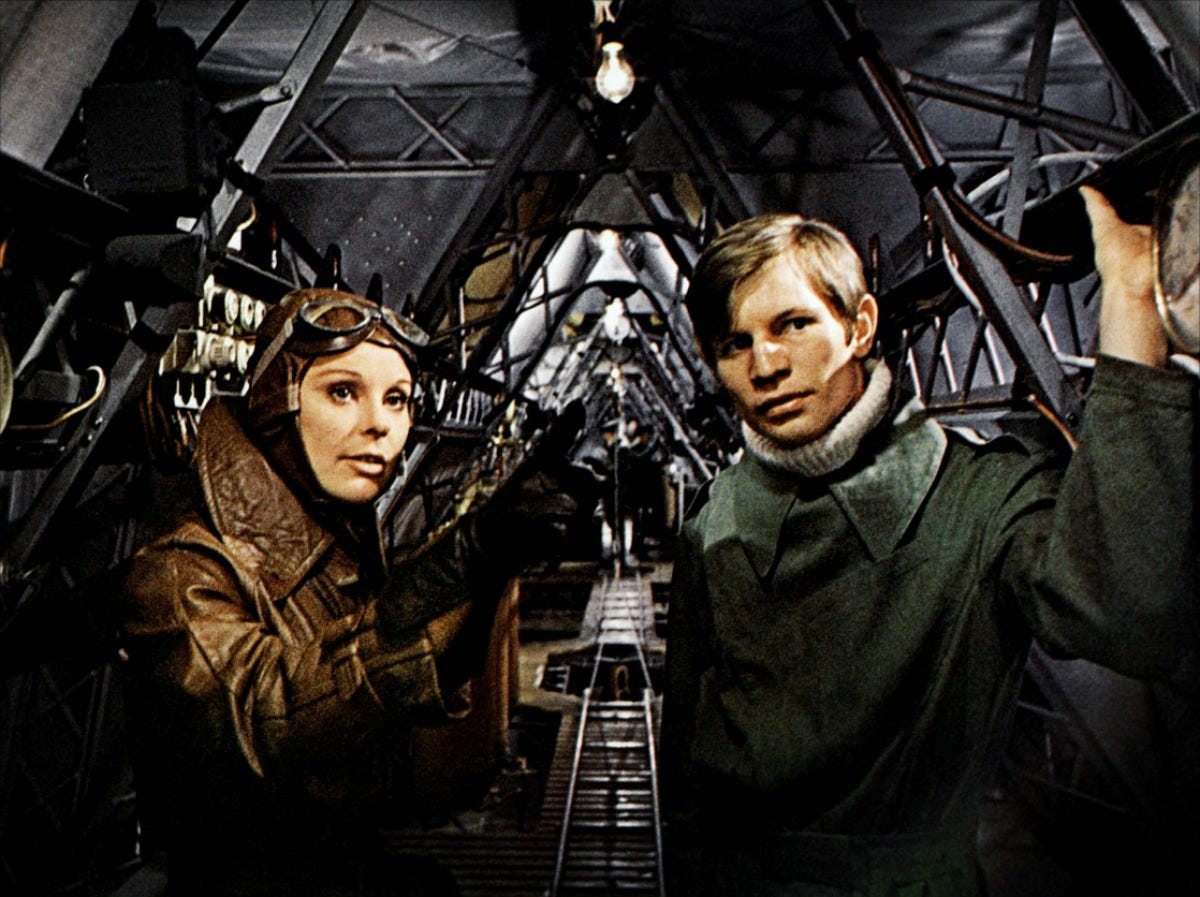
The Zeppelin stuff is fascinating. I’ve long had a thing about Zeppelins, the hydrogen-filled airship, pioneered by Count Ferdinand von Zeppelin at the beginning of the 20th Century. It’s easy to forget just how big they were (over 600 feet long), and how they bombed London during the First World War, in a sort of forerunner of the Blitz, in which 557 civilians were killed and 1,358 injured (across Britain). It must have been a terrifying sight: a Zeppelin caught in the searchlights. Zeppelin bomb damage can still be seen to this day in London — on the facade of the Victoria & Albert Museum extension in Exhibition Road, South Kensington, and around Cleopatra’s Needle on the Embankment.
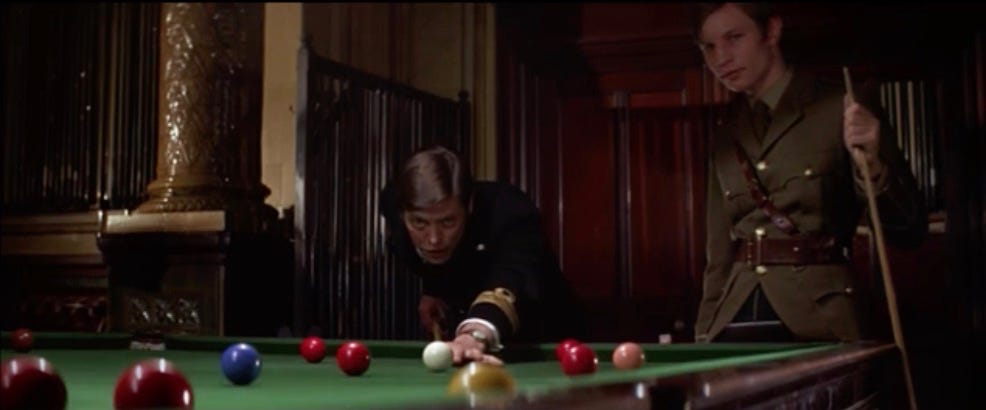
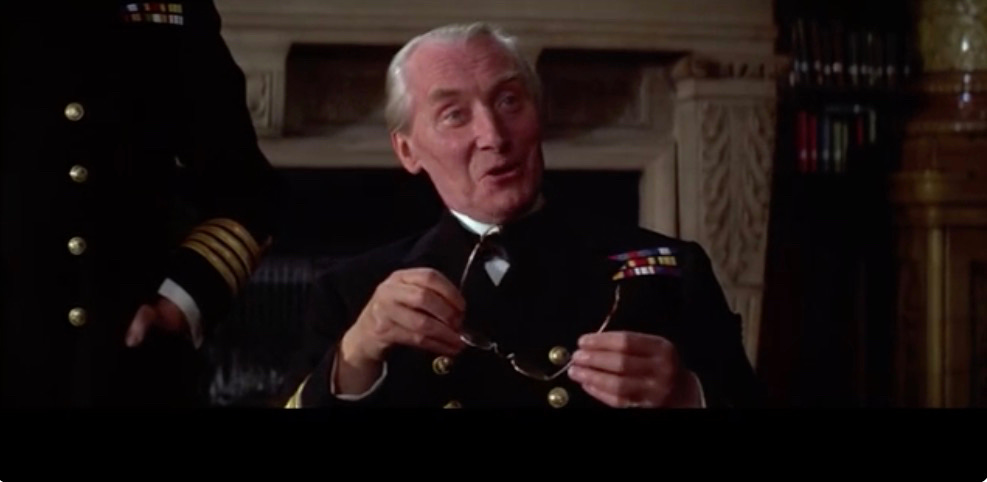
But actually, pushing the disturbing historical reality to one side, Zeppelin (1971) is a rather good yarn. They get the uniforms more or less right, up to a point, Lord Copper, altho’ I’m not sure about the British army shirts, which look suspiciously like 1970s drip-dry. Man-made fibres? But the St James’s clubbish atmosphere, with its billiards, mahogany and stuffed leather, is great, especially with all those naval stiff collars, even if the girls (as they always do in these films) look more 1971 than 1915: a world where, actually, until the 1920s, respectable women wore very little makeup.
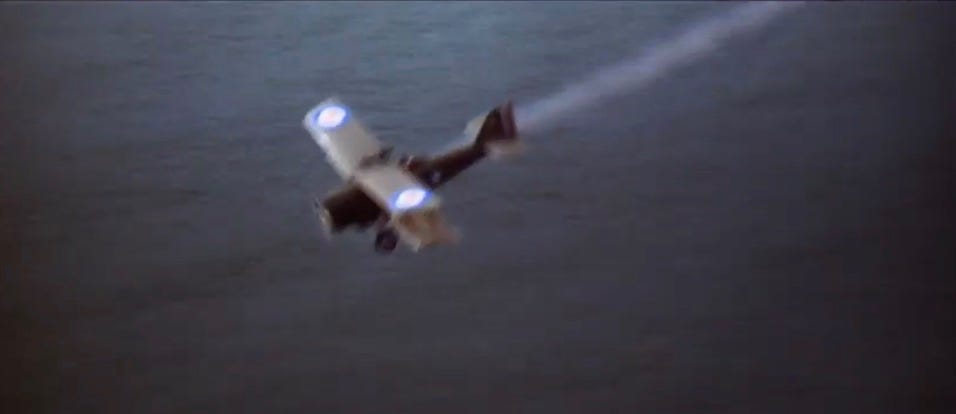
The Zeppelin in the film is, of course, a model, but the effects ain’t half bad for the time, and the Zeppelin gondola, I gather, is a replica of a real-life control car, based on a British airship, the R33, at the Royal Air Force Museum. There’s also a cracking sequence in which a squad of German Strumtruppen raid the castle, in Stahlhelme and gasmasks. And there’s a spectacular real-life dogfight with replica SE5as (also used in the excellent The Blue Max (1966), filmed in real time — as was the wont before the dreaded CGI — in which, I’m afraid, there was an aerial collision, and five people were killed.
And so we can add Zeppelin (1971) to our burgeoning list of First World War films, or, at least, films set during the First World War, which include, so far: Waterloo Bridge (1940), King and Country (1964), The Blue Max (1966), Oh! What a Lovely War (1969), The Assassination Bureau (1969), Upstairs Downstairs (1971-1975), The Amazing Mr. Blunden (1972), The Duchess of Duke Street (1976-1977), The Thirty-Nine Steps (1978), The Return of the Soldier (1982), and Reilly, Ace of Spies (1983). Interesting, isn’t it? This 1960s/1970s obsession with the First World War. We shall do more. You know how much I like lists.
I watched Zeppelin (1971) on YouTube, where there’s a reasonably watchable recording (plus another with Spanish subtitles?), otherwise it’s DVD time. I couldn’t find it on Amazon Prime Video, but it might be available on other platforms abroad. I hope you enjoy Zeppelin (1971). It’s a classic rainy Sunday afternoon film. Schnapps for this one. Prost!
If you liked this piece, why not subscribe?
🗓 Free subscribers get a new post every Sunday morning — part memoir, part film criticism, part social history.
🔐 Paid subscribers receive the full version every Friday, plus unlimited access to the complete archive — now featuring well over 200 film recommendations (and counting), films that have that certain je ne sais quoi.
📬 It’s £5/month or £50/year, and your support helps keep the projector running.
Such a nice young man, Michael York (love that mod hairdo, BTW). I always associate him with ‘Cabaret’. Have you done that?
This is right up my alley.
Never saw it, though.