
See No Evil (1971)
'Keep your eyes on what she cannot see...'

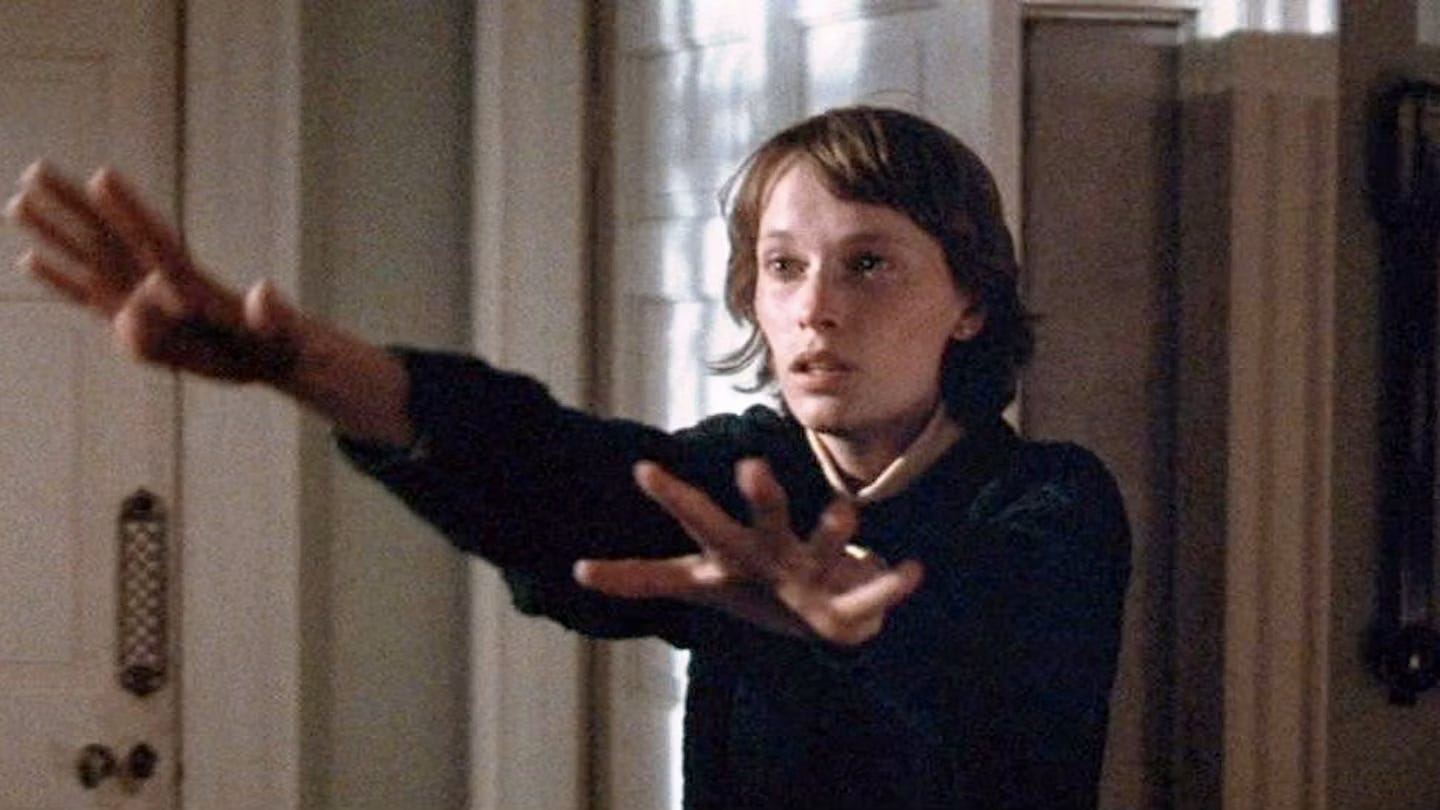
Sunday’s film recommendation (which, as ever on a Sunday, is FREE and open to all) is See No Evil (1971) starring Mia Farrow. International Velvet (1978) meets The Bird with the Crystal Plumage (1970). It’s a deliberate Sunday morning rabbit hole to fall into, this one, and I’ve included numerous juicy links to get your teeth into. I hope you enjoy it as much as I did writing it…
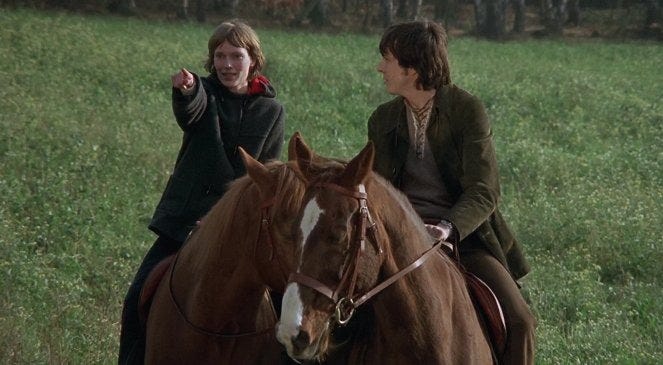
I spent the most enjoyable evening yesterday watching See No Evil (1971) aka Blind Terror. In the best traditions of giallo, there’s a maniac on the loose, in camp rodeo boots, on the mean streets of Wokingham. And of course, until the very end of the film, we never see his face, only those pesky boots. Filmed ‘On location in Berkshire, England’, See No Evil (1971) was directed by Richard Fleischer from a script by Brian Clemens of Avengers fame, and it’s best described as a psychological thriller with snippets of horror. Set amongst the horsey folk of the Home Counties — a nice plummy family, flared stable lads, a blue and white Land Rover, antiques and a stucco’d manor house with shutters — it’s as if Bryan Forbes went giallo: International Velvet (1978) meets The Bird with the Crystal Plumage (1970); the slasher Black Beauty. The Children’s Film Foundation turned Certificate X.
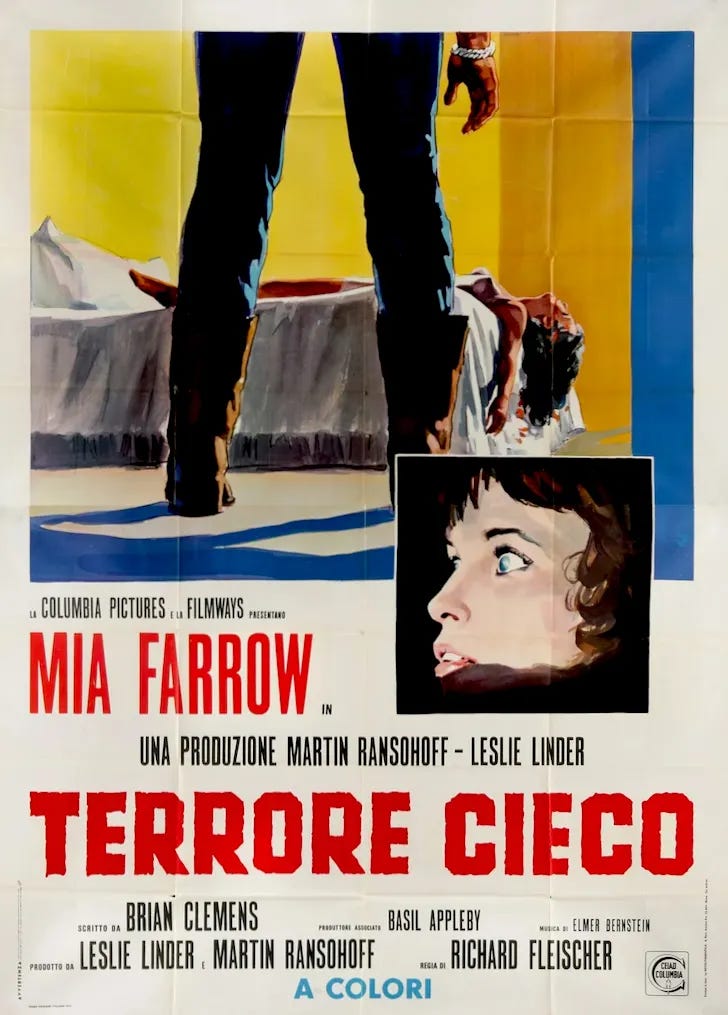
And Mia’s in it. Yep, the one and only Mia Farrow. As Sarah, a twenty-five-year-old girl who’s gone blind following some terrible riding accident. It’s a remarkable performance, winning her praise at the time. Mia has this incredible vulnerability; she’s fragile, you feel desperately sorry for the girl, who honestly, considering her desperate plight, barely makes a fuss — in the best tradition of the Stiff Upper Lip. And good on her. Kevin Thomas, writing in The Los Angeles Times, praised Farrow’s ‘tour-de-force performance’, in a role ‘ideally suited for her gifts in expressing great vulnerability matched by fierce spirit.’ And it’s a clever directorial wheeze, as from a voyeuristic point of view, we (the viewer) can see all sorts of ghastly and dreadful things going on in the background, which obviously the poor girl can’t.
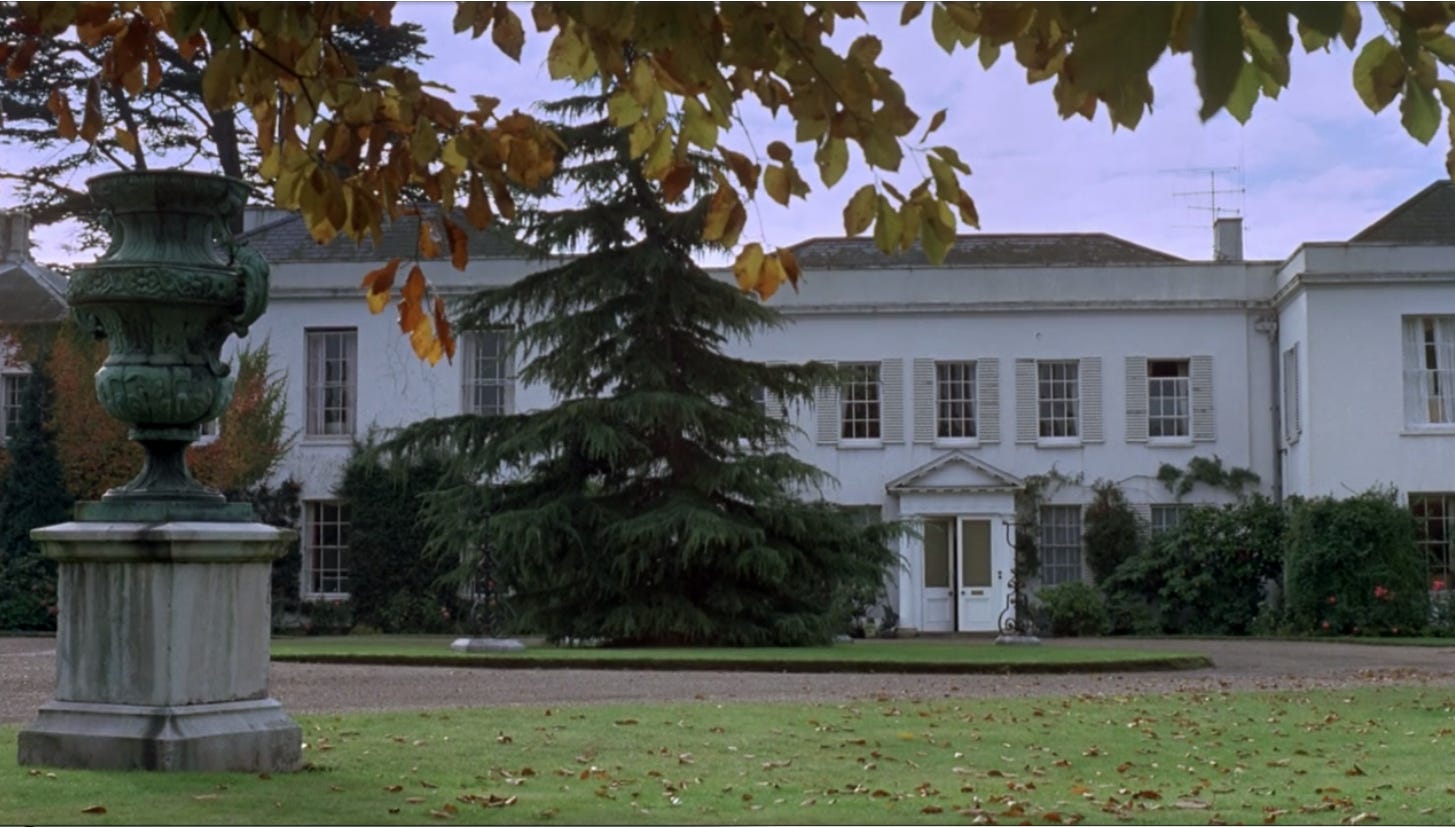
So Mia’s sent to stay with Uncle George (Robin Bailey) and Aunt Betty (Dorothy Alison) in their desirable stucco’d Regency Berkshire manor house — which just happens to be Binfield Manor, as featured in Interlude (1968), The Spiral Staircase (1975), The Sweeney (1975-1978), The New Avengers (1976-1977), The Professionals (1977-1983), The Stud (1978), and the horror anthology, Tales that Witness Madness (1973). One of the many things I love about British B movies of the late 1960s and 1970s is the locations. How the same places — in Berkshire, South Buckinghamshire and Hertfordshire — crop up time and time again: but then, I suppose, they’re convenient for London, Pinewood and Elstree studios: the shady lake at Burnham Beeches, the dripping rhododendrons of Black Park, near Slough, with its forest of Teutonic pine trees (incredibly useful if you’ve escaped from Colditz); St Hubert’s near Gerrards Cross — the Victorian hunting lodge of the Le Poer Trench family — as featured in The Persuaders! (1971), The Professionals (1977-1983) and The Masks of Death (1985); High Canons, another stucco’d Regency pile near Borehamwood, seemingly a magnet for oop-market devil worship (Hammer’s The Devil Rides Out (1968) and The Satanic Rites of Dracula (1973)). And along similar lines, Harefield Grove (used in the rather goodish made-for-television Bram Stoker’s Dracula from 1974, with Simon Ward), Fulmer Hall (Those Magnificent Men in Their Flying Machines (1965) and The New Avengers (1976-1977)), and the wedding cake of Pinewood’s Heatherden Hall, the star of numerous films, including From Russia with Love (1963), Chitty Chitty Bang Bang (1968), The Amazing Mr Blunden (1972), The Great Gatsby (1974) and the SAS extravaganza, Who Dares Wins (1982).
At the same time, the quaint brick and flint villages of South Buckinghamshire, within a day’s shooting from London, turn up time and time again: Hedgerley, a stone’s throw from the M40, in The Amazing Mr Blunden (1972) and The Belstone Fox (1973); Hambleden in The Witches (1966), Chitty Chitty Bang Bang (1968), and Dance with a Stranger (1985), and Turville in Went the Day Well? (1942) and An Education (2009). There’s an incredibly useful website, Avengerland, which charts the topography of all these places in anal detail: it’s like a 1970s Home Counties parallel universe. And I know that if, say, I was living in exile in the South of France or the Hollywood Hills, the locations and ambience of See No Evil (1971) might make me feel incredibly homesick. For the flat Berkshire countryside (the mist rising off the damp fields in a raw March or a golden October), the caw-caw of rooks roosting in elms at sunset; for the single-track lanes (with passing places), run-down stable yards, stinging nettles and abandoned tractors, the walled kitchen gardens in old red-brick: the murky, water-colour light of Southern England.
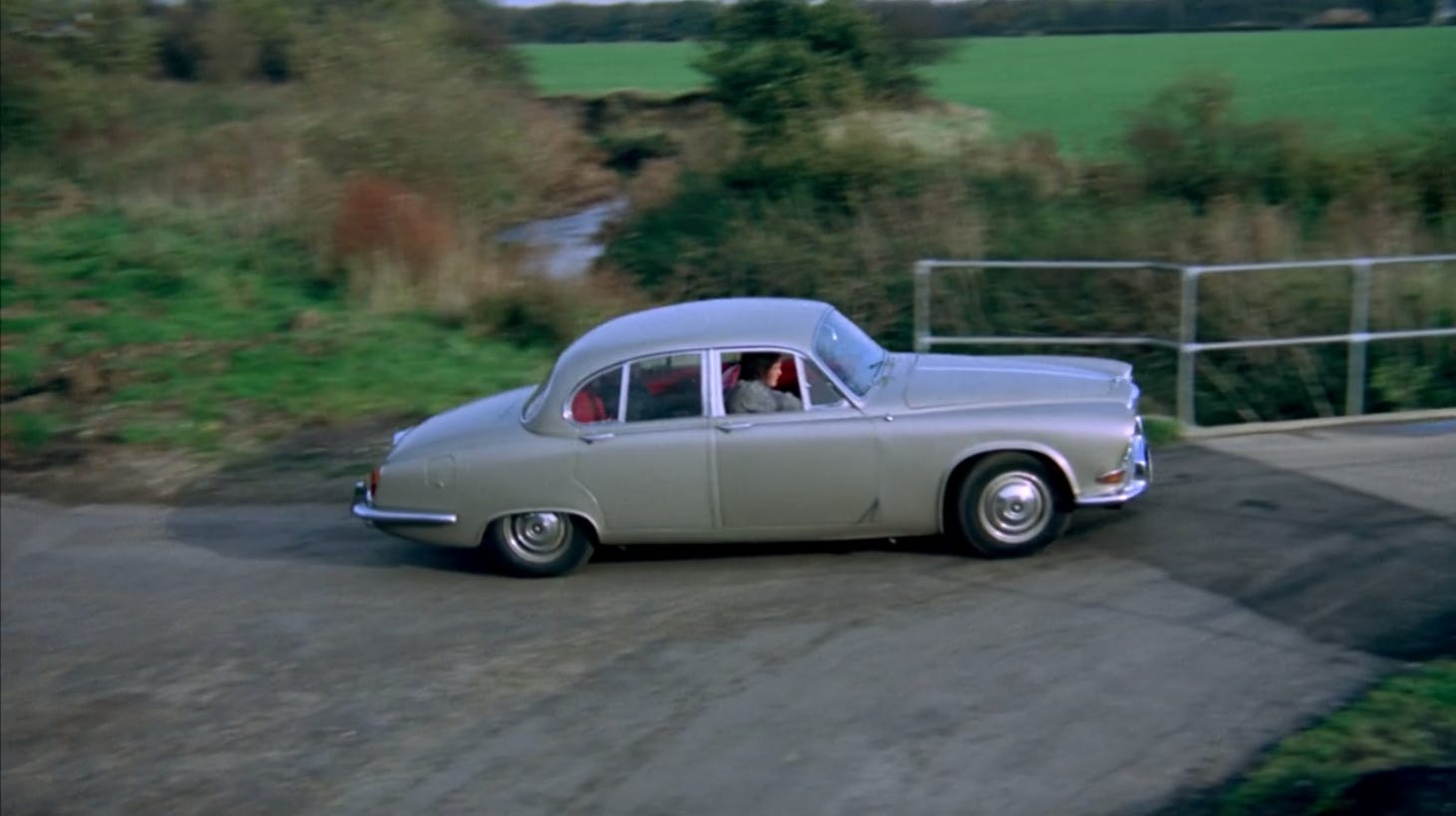
Anyway. So far so good. So Sarah’s staying with her terribly nice relations, and up until now, nothing really sinister’s happened, apart from various interactions with a creepily suspicious forelock tuggin’ gardener and his battered Suffolk Punch lawnmower. In the meantime, and as we wait for things ‘orrible to begin, there’s an opportunity to ogle the antiques and the interior decoration, including a Sub-Romney portrait in the hall, a further Sub-Winterhalter portrait of Queen Victoria, softly chiming carriage clocks (why do early 1970s British films always have softly chiming carriage clocks?), Boulle side tables, framed wax seals, a snazzy pink and cerise fitted-carpet combo on the upstairs landing à la David Hicks (“Mandarin red and fuchsia is a very chic combination this year, Sah.”) — and a dried herb rack in the all-white kitchen.
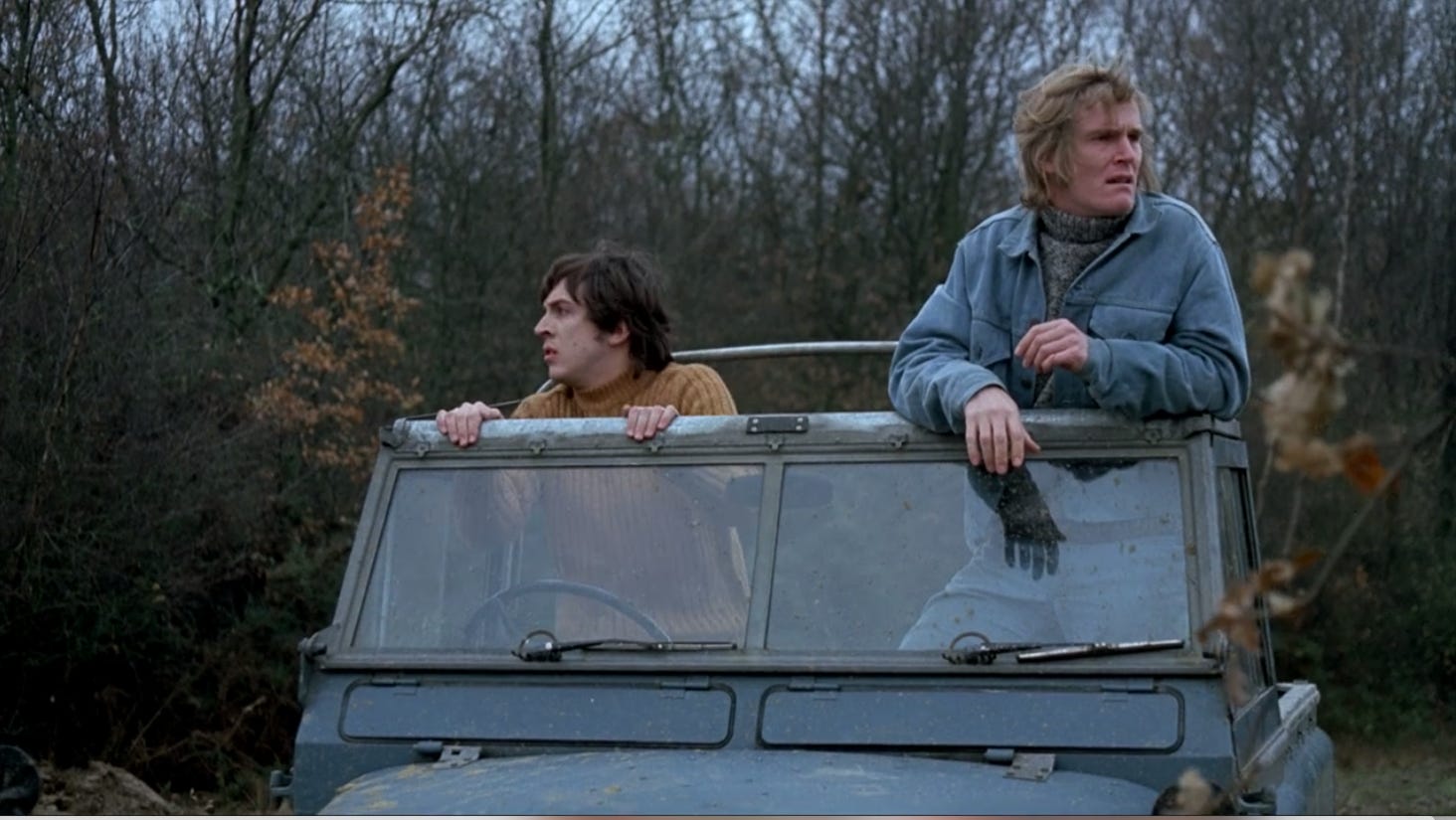
And before I forget, there’s a gaggle of long-haired stable lads, in chunky polo necks, nylon stretch breeches, rubber riding boots and mockney accents, all of whom look suspiciously like a young Paul Nicholas — which ain’t surprising as one of them actually turns out to be a young Paul Nicholas. And that’s when things turn nasty. Look. I’m not going to spoil it for you, but the rest of the film’s all about Mia alone in the house, apart from the chiming clocks. And there’s a camp of local gypsies, with the familiar face of Lila Kaye, and an abandoned clay pit, which looks like something from Doctor Who. Despite See No Evil’s B-Movie credentials, the cinematography is by the highly respected Gerry Fisher, responsible for so many films we’ve covered on WEEKEND FLICKS., including Joseph Losey’s Accident (1967), The Go-Between (1971), and The Romantic Englishwoman (1975); Interlude (1968), The Amazing Mr Blunden (1972), Juggernaut (1972), and Aces High (1976). André Previn (Mia’s other half) was originally commissioned to write the soundtrack, although the final honours went to Elmer Bernstein, responsible for the soundtracks for Charles and Ray Eames’s delightful short, Toccata for Toy Trains (1957), The Magnificent Seven (1960), and The Great Escape (1963).
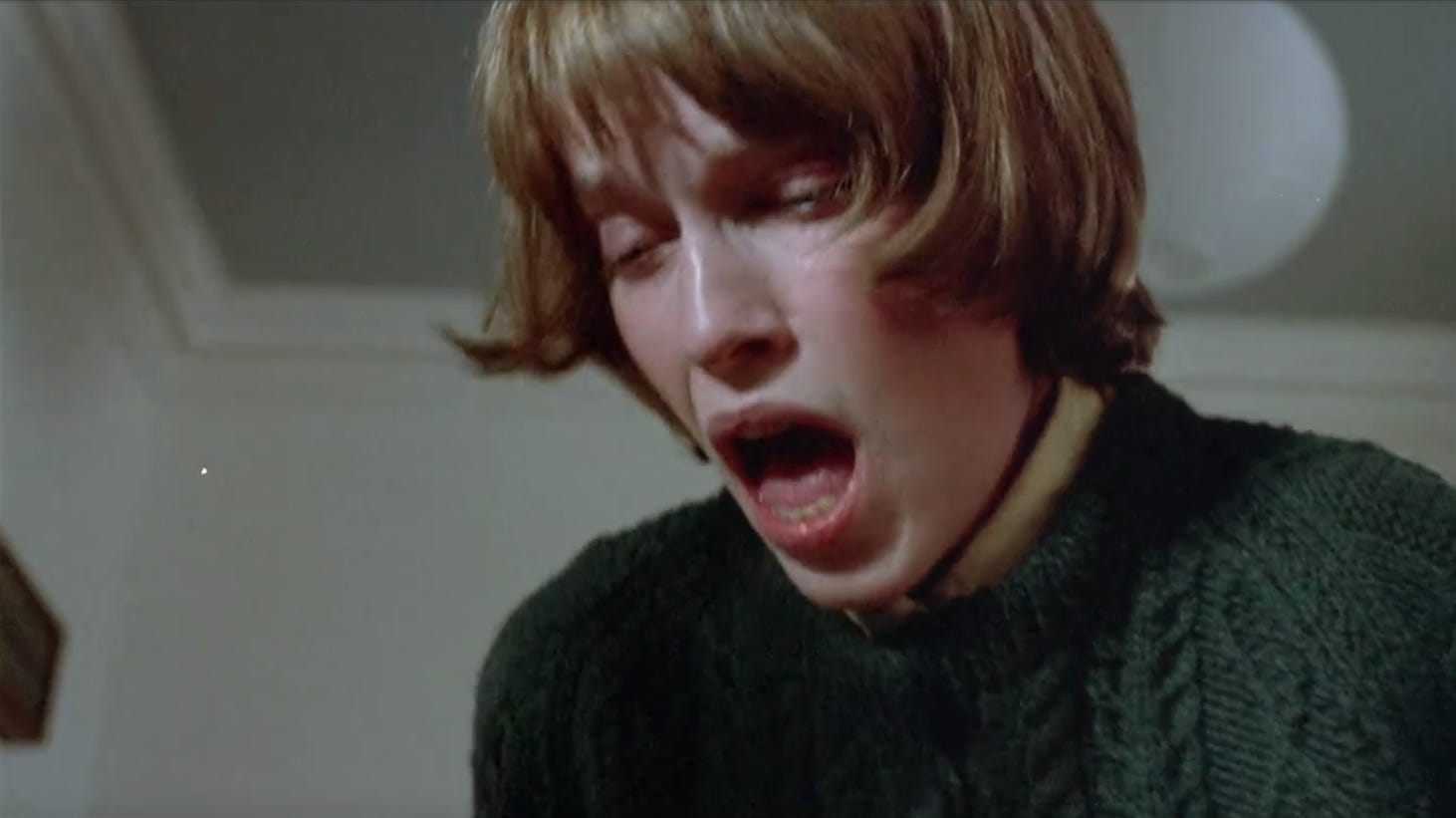
See No Evil (1971) opened to mixed reviews. ‘Sadistic’, ‘cheap thrills’, ‘men with warped desires’. Well… that’s one take on it. Counter this with ‘superbly written’, ‘brilliantly photographed’ and ‘a creepy atmospheric thriller’. Interestingly, the opening shots, in Wokingham High Street, of all places, seem to reference the permissive society, the influence of porn mags, sex shops, television, cinema and the Vietnam War — almost as if to explain why Mr Cowboy Boots goes on his murderous rampage. Yet, at the same time, See No Evil (1971) is very much a product of the Post-Hays Code era.
But then, as we’ve always argued on WEEKEND FLICKS. Cinema for Grown Ups, the best WEEKEND FLICKS. films don’t necessarily have to be ‘good’ — whatever that means. But they do have to have something about them. Which See No Evil (1971) undoubtedly has. Honestly, it’s not that scary, and Venetia seemed to enjoy it. Which is never a bad thing.
I watched See No Evil (1971) on Amazon Prime Video, and it’s also available on Apple TV, YouTube rental, and, of course, DVD and Blu-ray.
A big thank you to all of you who have subscribed. How are we doing? Time for a recap. I began Luke Honey’s WEEKEND FLICKS. Cinema for Grown Ups, back in December 2023 — inspired by those vintage indents for London Weekend Television. That feel-good feeling on a late Friday afternoon when sensible, worthy old Thames Television handed over to the racier LWT. My bright idea (which, like Archimedes’, occurred to me in the bath) was to recommend two films over the weekend, with the rule that all films should be readily available, either on affordable DVDs or, preferably, as instant downloads. A good move for the impatient and the impecunious.
WEEKEND FLICKS. is very much a personal view. Old films have brought me a great deal of pleasure over many years, and I’m hoping that I can inspire you to watch something you may have forgotten about, or might not even have come across. As most of these films are no longer shown on television, the urge becomes more pertinent.
We’ve just hit 1,600 subscribers. It’s bloody hard work (7.00 am sharp, a crawl to the computer, a cup of strong black coffee and calluses on my fingers), but I enjoy it immensely. And there are now well over 200 films in the WEEKEND FLICKS. archive.
So what do you get? Two possibilities on WEEKEND FLICKS.: ‘Paid-for’ subscribers get an extra, exclusive film recommendation every Friday morning, plus full access to the complete archive. It costs £5 a month (or £50 a year) — a bargain, frankly, when you compare it to a few cups of coffee, a packet of semi-legal gaspers or a pint of the fizzy stuff in a pub. ‘Free’ subscribers get access to the Sunday newsletter, plus the ‘free subscriber’ films in the archive. Either option is a good bet.
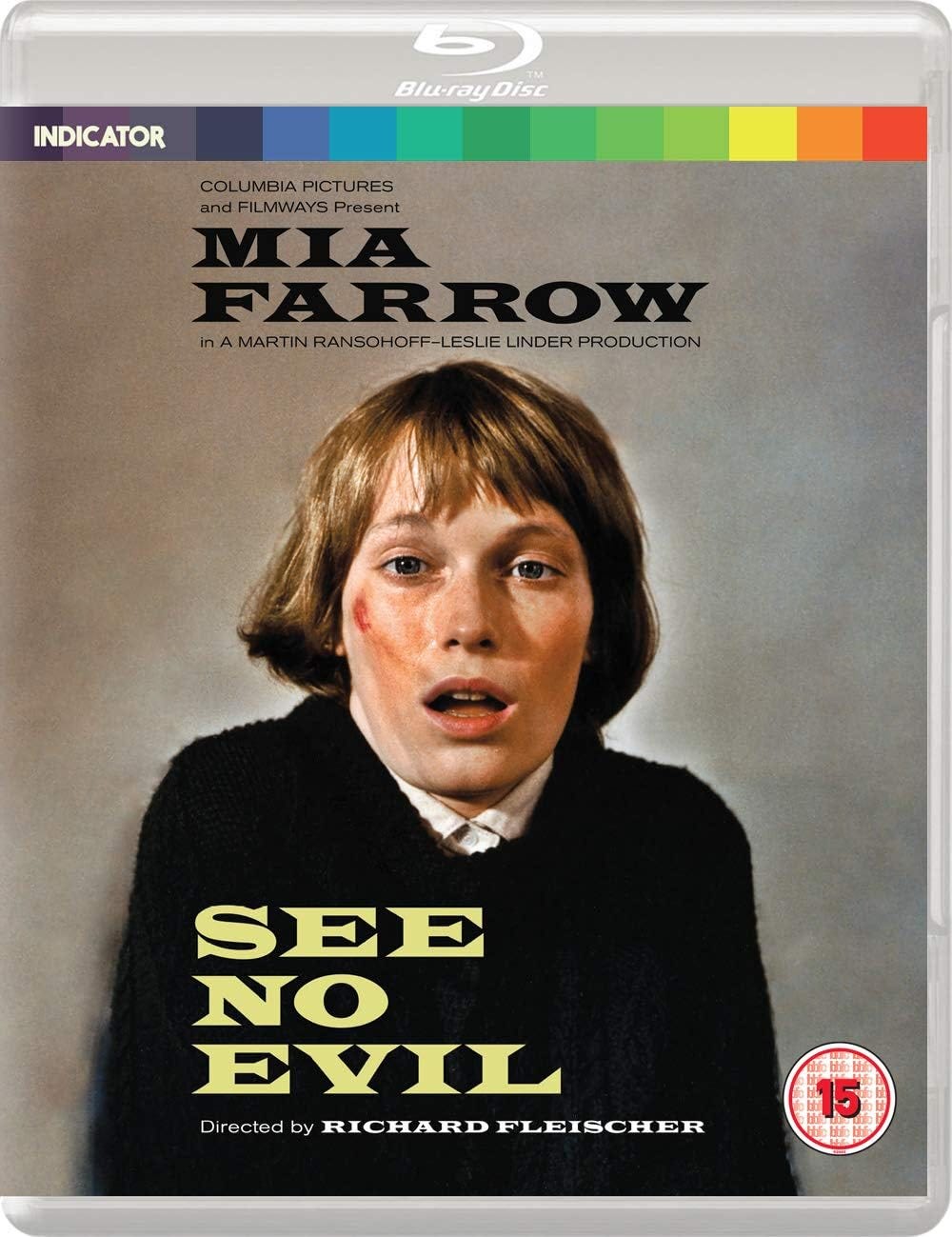
I must dig this out and watch it again.I bought the DVD years ago when Woolworths was closing down,I remember Paul Nicholas was in it but not much else .I will now look at it with a new eye,if that isn't poorly phrased.
I went to see this in first run being a big fan of Mia Farrow, but I still can’t see it without thinking of Audrey Hepburn’s brilliant appearance in Wait Until Dark which made Farrow’s film feel derivative.